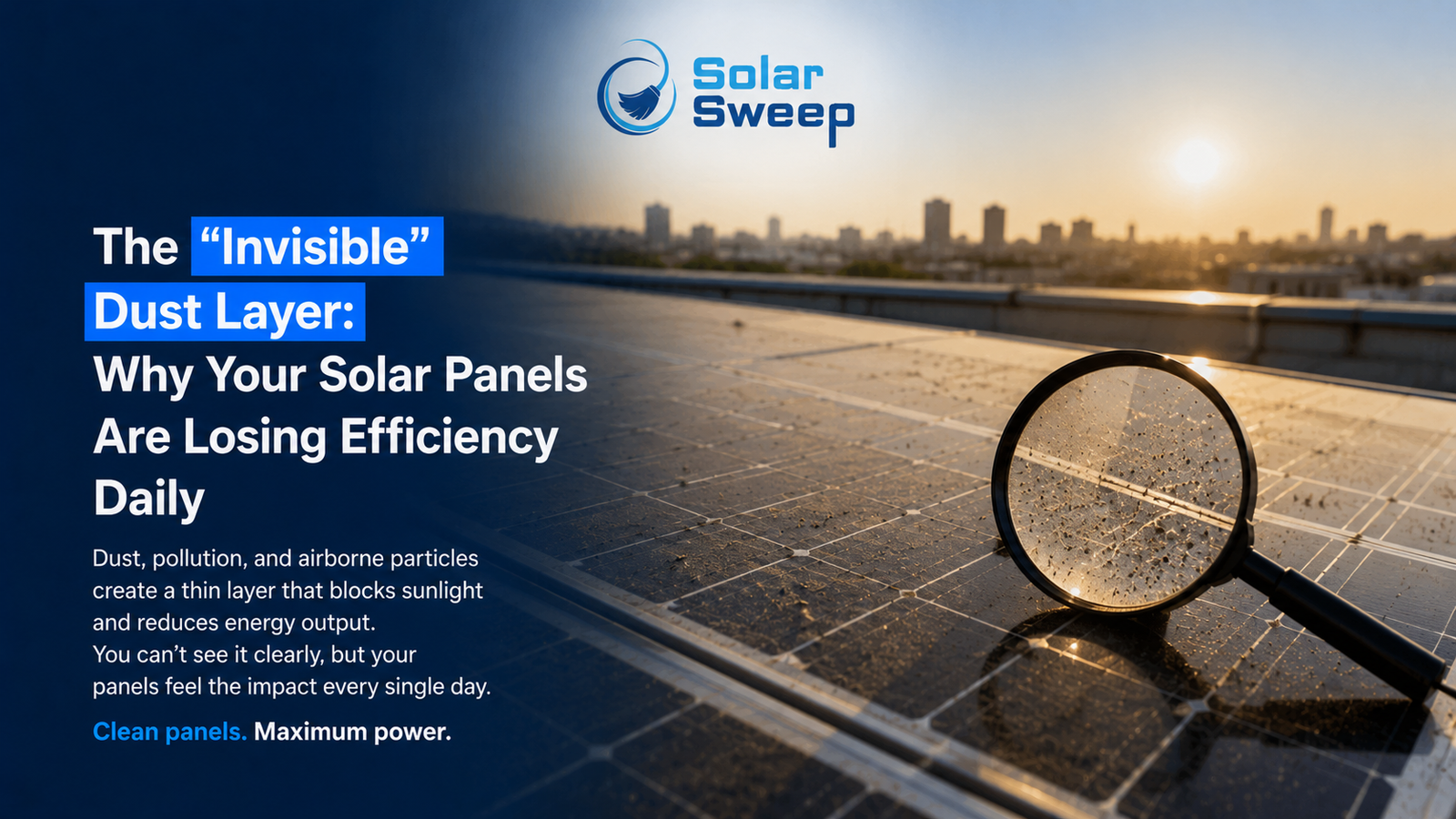
A solar panel does not have to look dirty to be underperforming. In Karachi, a fine layer of dust can settle on the glass within days. From the ground, the panels may still look normal, yet their surface may already be holding road dust, construction particles, sea salt and pollution. Every bit of buildup limits the sunlight reaching the cells and quietly reduces the power your system produces.
That is why solar panel cleaning Karachi is not simply about making a rooftop look neat. It is part of keeping the system productive, especially during long dry spells.
Table of Contents
5 Things Hiding in That “Clean-Looking” Layer
The grey film on a panel is rarely just ordinary dust. It may contain:
- Sand and soil carried by wind
- Smoke and fine particles from traffic
- Cement dust from nearby construction
- Salt brought inland by coastal air
- Bird droppings and dried water marks
Because the change happens gradually, many owners do not notice it until their electricity bill rises or the monitoring app shows weaker output.
Why Karachi’s Weather Makes the Buildup Worse
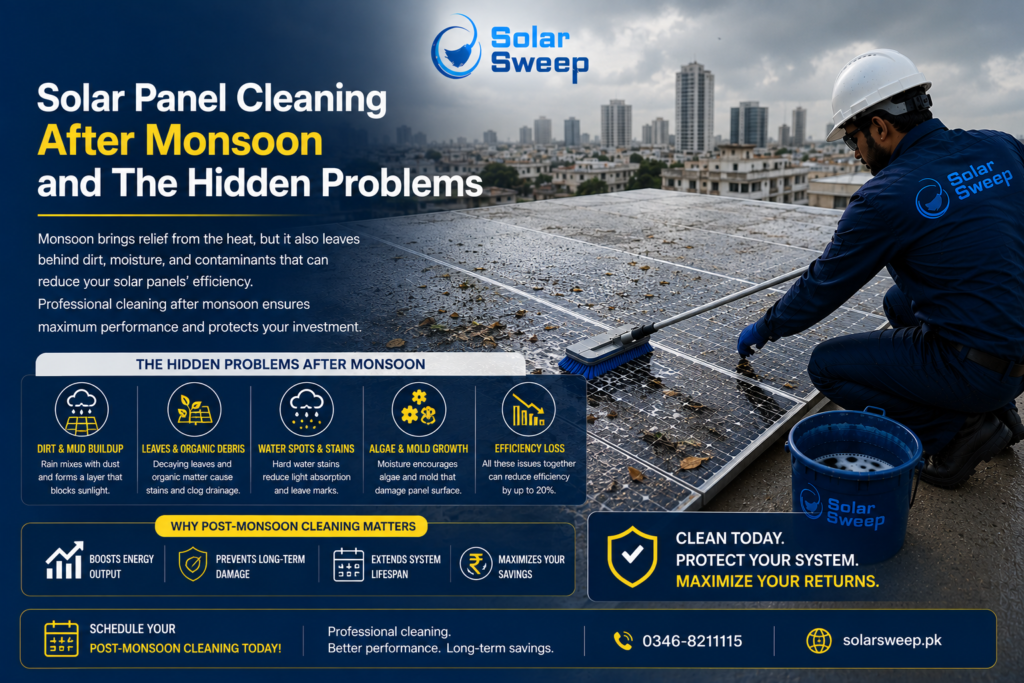
Karachi’s heat and humidity create ideal conditions for dust to stick. Moisture settles on the glass, catches fine particles and forms a dull film. Once the sun heats the panel, that film dries and becomes harder to remove.
Coastal salt also helps fresh dust cling to the surface. Panels near busy roads, open plots, industrial zones and construction sites usually collect dirt faster.
4 Signs Your Panels May Be Losing Power
Look for:
- Lower production on clear, sunny days
- Electricity bills rising without a change in usage
- Dark lines of dirt along the lower frame
- Bird droppings or leaves covering individual cells
Compare output from similar clear days rather than relying on one reading. If the system is producing noticeably less than before, the panels may need attention. A sudden drop can also point to shading, wiring or inverter trouble, so further inspection may be needed if cleaning does not restore output.
How a Small Daily Loss Becomes a Real Expense
Dirty panels usually keep working, which is why the problem is easy to ignore. They still produce electricity, just less of it. The missing energy is then taken from the grid.
A small daily loss adds up over several weeks. Across a large business rooftop, a modest reduction on many panels can affect operating costs. At home, it may mean paying more during the hottest months.
Regular solar panel dust removal helps the system use the sunlight already available. It does not create extra sunshine; it removes the barrier wasting it.
Before and After: Make the Difference Visible
Place a side-by-side image here using the same panel, camera angle and lighting. Show the dusty surface first, then the glass after proper cleaning. A screenshot of the system’s output before and after service can make the result even clearer.
The buildup often looks harmless until a clean section is placed beside it.
Why Rain Is Not Enough
Rain can remove loose dust, but it rarely gives panels a complete clean. Light rain often mixes with dust and leaves muddy streaks. Bird droppings, oily pollution and salt marks may remain, while dirty water can collect near the frame on low-angled panels.
Waiting for rain also means accepting reduced output for weeks. A planned cleaning schedule is more reliable.
6 Cleaning Mistakes That Can Cause Damage
Avoid:
- Scrubbing with a hard brush
- Using household detergent
- Walking or kneeling on panels
- Spraying with excessive water pressure
- Pouring cold water on very hot glass
- Working on the roof without safety equipment
Panels become extremely hot in the afternoon. Cleaning early in the morning or at another suitable time is safer. Solar Sweep uses methods suited to the site, the dirt and the condition of the system.
Quick Checklist
Your panels may need cleaning when:
- A grey film is visible
- Output is falling on clear days
- Dirt is collecting around the frame
- Bird droppings are covering cells
- Nearby construction has increased
- Several months have passed since the last clean