

Warehouses in Karachi often have one major advantage for solar energy: large, open rooftops. These spaces can support sizeable photovoltaic systems that help power lighting, offices, ventilation, security equipment, and other daytime operations.
But a large solar array also creates a large maintenance responsibility. Dust, pollution, bird droppings, nearby construction, and industrial particles can gradually cover modules and reduce the sunlight reaching the cells.
For warehouse owners, warehouse solar panel cleaning Clifton Karachi should be treated as part of routine facility management rather than an occasional cosmetic task.
Table of Contents
Why Warehouse Solar Panels Get Dirty Faster
Warehouse roofs are often located in commercial or industrial zones where trucks, loading activity, construction, unpaved yards, and nearby factories generate airborne particles.
The IEA Photovoltaic Power Systems Programme identifies soiling as a leading cause of PV underperformance and estimates average global energy losses of about 4% to 7%, although actual losses vary widely by site.
For a large warehouse rooftop solar system, even moderate soiling can matter because the installed capacity is usually much greater than a household system.
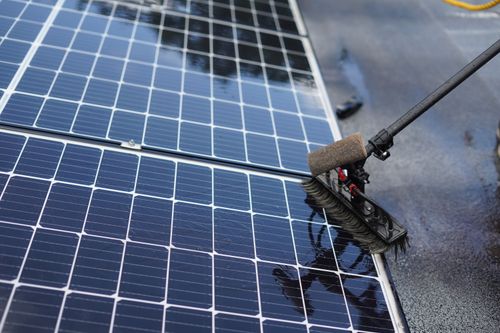
Why Cleaning Matters at Commercial Scale
Warehouses often use electricity heavily during daylight hours. If solar generation falls because of contamination, more electricity may need to come from the grid or backup sources.
This is why industrial solar cleaning should be connected to performance monitoring. Owners can compare inverter data before and after cleaning. If output improves, soiling was likely contributing to the loss. If generation remains unusually low, another technical issue may need investigation.
Cleaning Frequency Should Match the Site
There is no single cleaning schedule that suits every warehouse.
A facility beside a busy road, open plot, or construction site may need more frequent cleaning than one in a cleaner area. Panel tilt, rainfall, bird activity, and surrounding operations also affect contamination.
A practical commercial solar maintenance Karachi plan should consider panel condition, recent weather, nearby construction, inverter trends, bird activity, and previous cleaning results.
Safe Cleaning Is Essential
Large warehouse arrays may contain hundreds of modules, so poor solar panel cleaning service Karachi methods can repeat the same damage across many panels.
Hard brushes, abrasive pads, metal scrapers, and unsuitable chemicals should be avoided unless the module manufacturer specifically permits them. Cleaning teams must also work carefully around cables, connectors, junction boxes, and damaged modules.
The U.S. Department of Energy recommends ongoing photovoltaic operations and maintenance to help systems meet production targets while reducing risks from soiling, micro-cracking, corrosion, and other problems.
A professional solar panel cleaning service Karachi should therefore treat cleaning as part of wider system care, not simply washing glass.
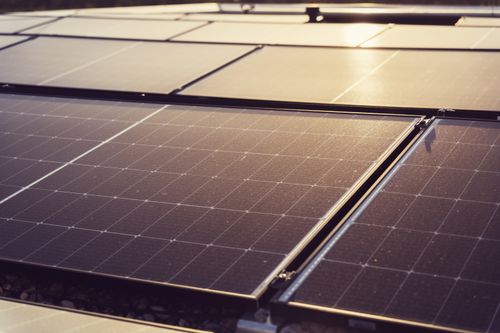
Warehouse Rooftops Need Extra Safety Planning
Commercial roofs may contain skylights, ventilation units, water tanks, fragile sheets, drainage channels, and electrical equipment. Before cleaning begins, technicians should understand access routes, fall hazards, and site-specific restrictions.
Workers should never use solar modules as walking surfaces. Warehouse management should also coordinate cleaning with normal operations so the service does not interfere with loading, production, security, or staff movement.
Use Cleaning as an Inspection Opportunity
A cleaning visit is also a good time to identify visible problems.
Technicians can look for cracked modules, loose clamps, displaced panels, hanging cables, bird nests, blocked drains, corrosion, and debris beneath the structure.
Research from NREL highlights the importance of measuring and understanding site-specific soiling when evaluating PV performance.
For warehouse owners, cleaning decisions are stronger when they combine physical inspection with generation data.
Construction Can Suddenly Increase Soiling
Warehouses are often expanded or renovated. A new shed, boundary wall, nearby building, or rooftop project can quickly increase dust around an existing solar array.
Cement powder and construction residue may also become harder to remove after getting wet. After major building work, a dedicated inspection and cleaning visit is sensible before returning to the normal schedule.
Keep Simple Maintenance Records
A cleaning record can note the service date, number of panels cleaned, visible condition, photographs, inverter readings, and recommended repairs.
These records help owners understand how quickly contamination returns, whether the schedule is effective, and whether the same problems keep appearing.
How Solar Sweep Supports Warehouses
Solar Sweep provides professional warehouse solar panel cleaning Clifton Karachi and maintenance services for commercial and industrial installations.
For warehouses, professional cleaning can combine module washing with visual condition checks and better awareness of system performance. Owners should provide information about panel quantity, roof access, operating hours, and known safety restrictions before a service visit.
This allows cleaning to be planned around the actual warehouse rather than using a one-size-fits-all approach.
Final Thoughts
Warehouse solar systems are valuable business assets, and their size makes planned maintenance important.
A structured warehouse solar panel cleaning Clifton Karachi programme can help owners control dust, identify visible defects, and maintain better awareness of system performance. Cleaning frequency should reflect actual site conditions rather than a generic timetable.
For warehouses in dusty commercial and industrial environments, professional cleaning, inspection, documentation, and performance monitoring work best together.
If your warehouse solar array shows visible dust buildup or declining generation, professional cleaning can help restore a cleaner operating surface and highlight maintenance issues before they become larger problems.
FAQs
How often should warehouse solar panels be cleaned?
It depends on dust levels, location, weather, bird activity, and performance trends. Visual inspections and generation data should guide the schedule.
Can warehouse staff clean solar panels themselves?
Only where workers are properly trained and rooftop conditions allow safe access. Commercial roofs can involve fall and electrical hazards.
Does rain clean warehouse solar panels?
Rain may remove some loose dust, but sticky pollution, bird droppings, and accumulated residue can remain.
Should inverter data be checked after cleaning?
Yes. Comparing generation before and after cleaning can help show whether soiling was affecting output.
Is cleaning enough for solar maintenance?
No. Commercial systems also need periodic attention to modules, cables, mounting components, drainage, and electrical equipment.