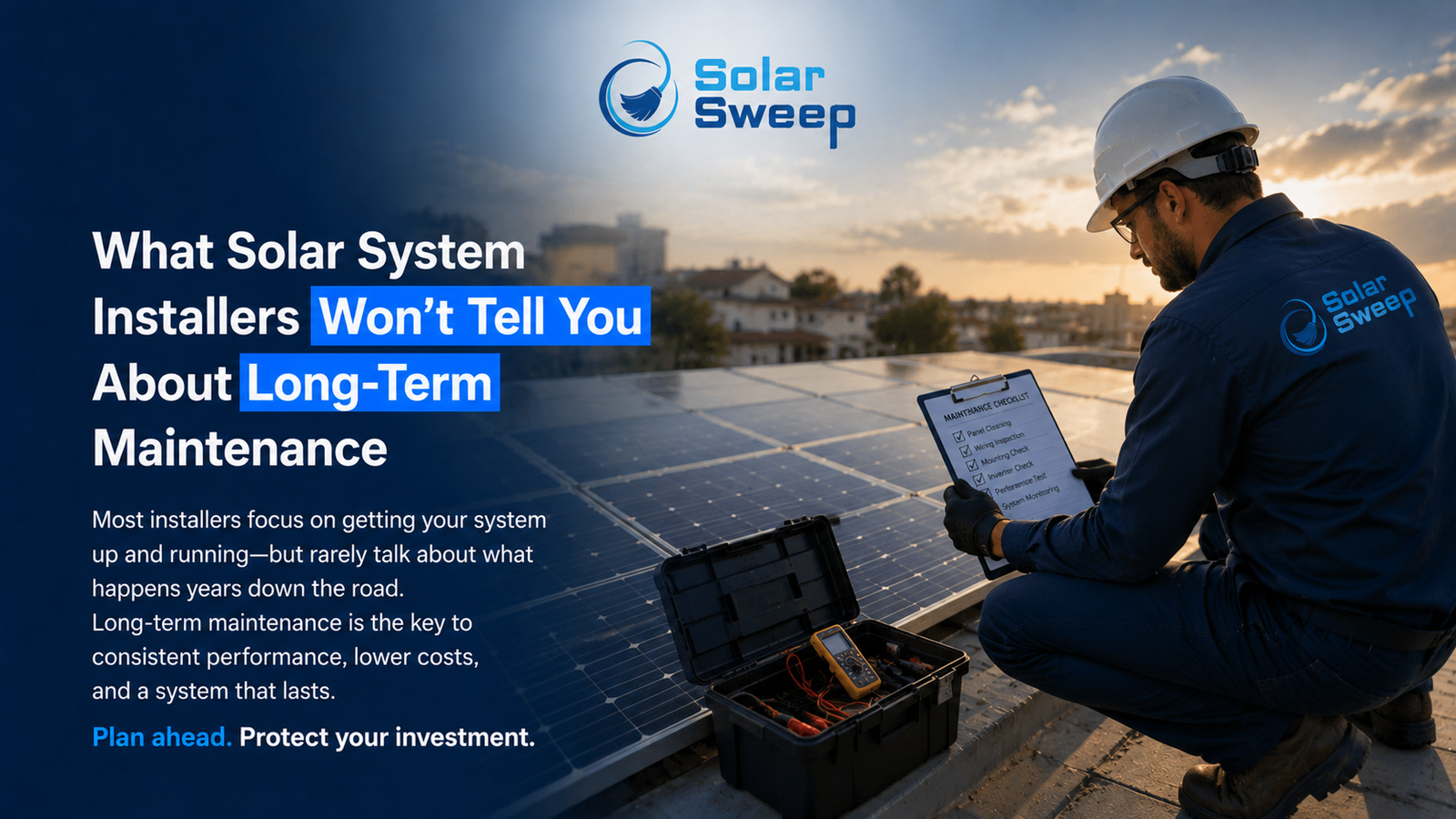
It’s at the final stages of a project and the day the solar system is turned on feels like the end of the world. In fact it is the start of the years of use. These panels, cables, brackets and inverters continue to be vulnerable to the heat, dust, and water. They withstand the test of time, however they cannot be overlooked.
Whereas most faults begin with low volume such as loose connectors, dusty panels, a warning from the inverter, or a bracket starting to corrode. The system continues to keep helping, so the owner feels everything is OK, and a gradual decrease in performance takes place.
Table of Contents
7 Problems That Can Develop After Installation
Over time, a system may face:
- Dust and salt buildup
- Loose electrical connections
- Cracked or exposed cables
- Inverter errors or overheating
- Corroded brackets and fasteners
- New shade from trees or construction
- A gradual fall in daily generation
Found early, these issues are manageable. Left unattended, they can shorten equipment life or turn a small repair into a larger one.
Karachi Weather Is Hard on Rooftop Equipment
The rooftop systems are subjected to challenges in Karachi. Metal, glass, cables get hotter and hotter in the strong sun and last for hours. Corrosive humidity and coastal salt spray stress corrosion; seals and areas of roof connection are tested by monsoon rainfall.
It is important to pay special attention to systems in the vicinity of the sea, main roads, factories or construction zones. Maintenance should be based in place and established according to system performance.
5 Inverter Warnings You Should Not Ignore
The inverter converts the electricity produced by the panels into power the property can use. Watch for:
- Repeated error messages
- Unexpected shutdowns
- Excessive heat
- Unusual buzzing or clicking
- Zero or unusually low production in daylight
The inverter needs ventilation, so keep its surroundings clear and its vents free of dust. An error that keeps returning should be investigated, not simply reset.
Loose Cables Are More Than a Performance Issue
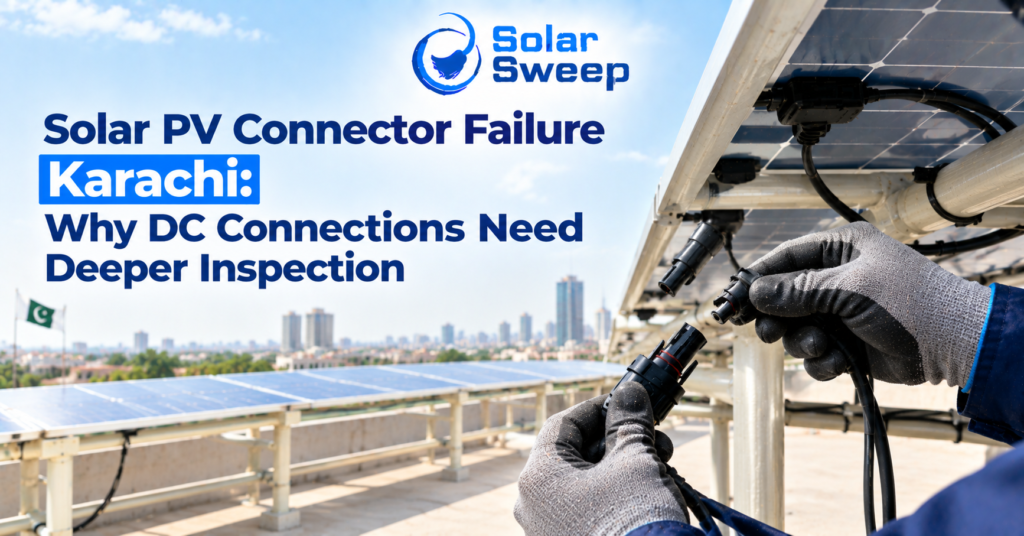
Cables and connectors can be damaged by heat, rain, birds, rodents or poor support. A hanging wire can strain a connection. Cracked insulation, burn marks or discoloured connectors need prompt attention.
Do not handle damaged solar wiring yourself. DC electricity can remain dangerous even when the main supply is switched off. A trained technician should inspect and repair it.
4 Mounting Problems That Deserve Attention
During maintenance, check for:
- Loose bolts or fasteners
- Rust or corrosion
- Panels shifted out of line
- Weak or leaking roof attachment points
Wind, heat and moisture can gradually affect the mounting system. Catching a loose bolt early is far cheaper than repairing a damaged panel or roof.
Before and After: Show What Maintenance Fixes
Use a short photo series here: loose cables before and after securing, a corroded fixing before and after repair, and dirty panels before and after cleaning. A screenshot showing improved output after service can also help.
These images make maintenance easier to understand because they show real faults.
Why Rain and Warranties Are Not Maintenance Plans
Rain may wash away some loose dust, but it will not inspect a connector, tighten a bracket or explain an inverter warning. It can also leave mud and mineral marks on panels.
A warranty does not cover every situation. Damage linked to neglect, incorrect cleaning or unauthorised repairs may fall outside its terms. Keep invoices, model numbers and maintenance reports together.
Why Gradual Output Loss Goes Unnoticed
A complete shutdown gets attention. A system producing slightly less may go unnoticed for months.
Compare generation from similar clear days. If the decline continues after cleaning, professional solar system inspection services can help identify wiring, inverter, shading or panel faults.
Quick Checklist
Arrange an inspection when:
- The inverter keeps showing errors
- Cables are hanging, cracked or exposed
- Output has fallen without a clear reason
- Bolts or brackets show rust
- Panels have not been cleaned for months
- No one has checked the system since installation
Preventive Care Costs Less Than Emergency Repair
Good maintenance is straightforward: clean the panels, inspect visible wiring, check the inverter, review mounting points and compare output. These steps catch problems while they are manageable.
Reliable solar maintenance services Pakistan should focus on the condition of the system, not on replacing parts unnecessarily. Solar Sweep can help owners spot cleanliness and performance concerns before they become expensive failures.