
The cost problem water can hide
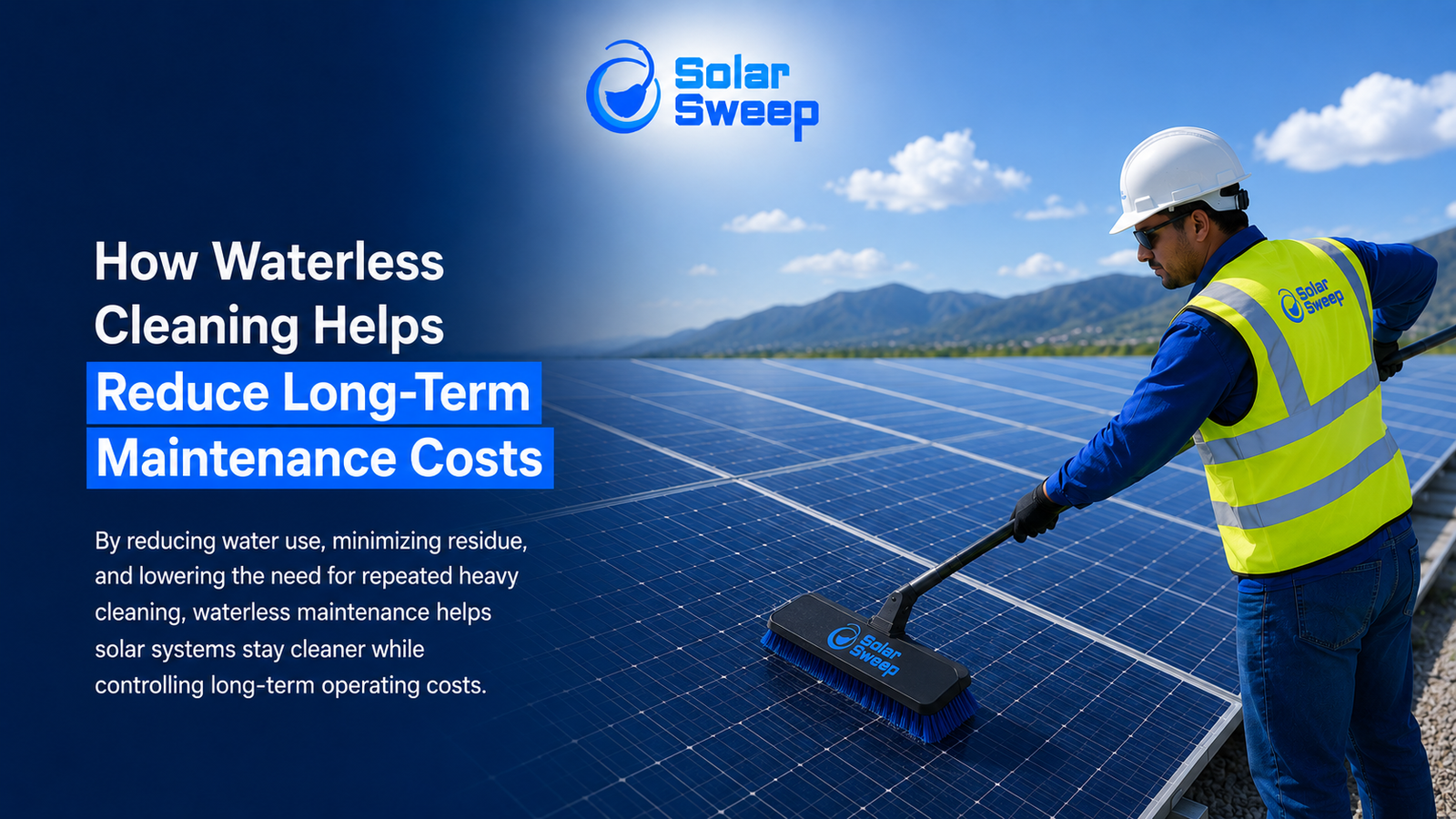
Solar owners usually notice dirt when production drops, but the bigger cost is often hidden in the way Waterless Cleaning is done. A rooftop team may use water, hoses, pumps, squeegees, and repeated access to the same difficult areas. Each visit looks small on paper, yet the extra time, safety controls, water handling, and wear on glass add up across a year. In hot, dusty places, panels need steady care, not occasional rescue work after output has already fallen. That is where waterless routines become useful. They remove the fine layer that blocks sunlight without turning every cleaning day into a wet maintenance operation.
Table of Contents
Where maintenance savings begin
A waterless method can reduce cost because it removes several jobs that normally sit around the cleaning task itself.
- There is no need to move heavy water drums across roofs or factory yards.
- Teams spend less time setting up pipes, storage tanks, and drainage control.
- The work area stays drier, so slip risk and cleanup time are lower.
- Panels can be cleaned more regularly because each visit is simpler to plan.
For businesses comparing Waterless solar panel cleaning with ordinary wash routines, the main saving is not only the missing water bill. The saving also comes from shorter site visits, fewer delays, and less pressure on maintenance staff who already manage electrical, civil, and safety work.
Less disruption for busy rooftops
Factories, warehouses, schools, offices, hospitals, and shopping buildings rarely have empty roofs. They often carry AC units, cable trays, skylights, walkways, antennas, and service zones. A wet cleaning setup can block routes, create puddles, and force managers to schedule more supervision than expected. Waterless cleaning is lighter. The team can move section by section, keep tools controlled, and avoid dragging wet equipment across areas that other technicians may need to use. For Solar Sweep, this matters because many clients want a cleaner system without turning the whole building into a maintenance site for the day.
Why dry residues need a softer routine
Fine dust behaves differently from visible mud. It sits in a thin layer, settles near panel edges, and returns quickly after windy days. If it is ignored for too long, the system keeps losing small percentages of production, which becomes expensive over months. If it is cleaned harshly, the glass can suffer from repeated friction, especially when dust is treated like stubborn dirt. A good waterless process uses suitable cloths, careful pressure, and a planned movement pattern, so dust is lifted rather than dragged. That helps protect panels while keeping performance more stable.
Cost areas that improve over time
Long term savings usually come from repeatable habits, not one dramatic service. Waterless care can help in several cost areas.
- Labour hours become easier to predict because setup and pack up are shorter.
- Water sourcing, pumping, and disposal issues are reduced on difficult sites.
- Emergency cleaning becomes less common when light dust is removed on schedule.
- Inspection is easier because cleaners can notice loose frames, stains, nesting, or cable issues during routine visits.
This is why Solar panel maintenance Karachi should not be treated as a once in a while expense. In a city with dust, heat, sea air, and traffic pollution, a practical cleaning rhythm can prevent the kind of neglect that later requires bigger repairs or rushed shutdowns.
A better fit for sites with limited water access
Some buildings have water available, but not in the right place. Others have pressure problems, storage limits, or access restrictions that make wet work inconvenient. A site may also want to avoid using clean water for repeated rooftop washing, especially when the result can be achieved without it. Waterless cleaning gives facility teams another option. It is especially helpful when managers want predictable maintenance without negotiating taps, hoses, and drainage every time. The process keeps the focus on the panels and the output, not on moving water around the property.
Small habits that prevent bigger bills
The real advantage is easiest to see after a few months. A roof that is cleaned before dust hardens needs less force, less time, and fewer awkward repairs around the cleaning job. The maintenance record also becomes clearer. Managers can see when output dipped, when panels were cleaned, and whether the recovery was normal.
That history helps them budget calmly instead of reacting to complaints about weak generation. It also reduces the temptation to send an untrained helper with a random cloth, which can be costly in the long run. Over time, that simple record helps owners compare service dates with daily energy behavior, which is far more useful than guessing whether dust, equipment faults, or changing weather caused the loss.
A practical routine for Karachi sites
A sensible maintenance plan does not need to be complicated. It should match the location, roof type, system size, and dust exposure.
- Check production trends before and after each cleaning cycle.
- Clean more often after dry windy periods instead of waiting for heavy buildup.
- Keep roof movement simple and avoid unnecessary handling of modules.
- Record visible issues so repairs can be planned before faults become costly.
Solar Sweep can support this kind of routine by keeping the cleaning process simple, careful, and repeatable. The value is not just a brighter panel surface. It is fewer wasted visits, fewer avoidable drops in output, and a maintenance plan that feels manageable for the people running the site.
Conclusion
Waterless cleaning helps reduce long term maintenance costs because it removes the extra work around cleaning, protects access areas, supports regular care, and reduces dependence on water logistics. It also gives building owners a practical way to deal with dust before it turns into lost production or urgent repair work. For commercial and residential systems, the cheapest approach is not always the one that waits the longest. The smarter approach is steady, light, well planned cleaning that keeps panels productive without creating more maintenance problems than it solves.