Karachi’s solar market is moving into a new phase. Installing photovoltaic panels is no longer the only consideration for property owners. As electricity pricing, grid conditions, and solar export policies continue to change, more attention is shifting toward how generated solar power can be stored and used when it is actually needed.
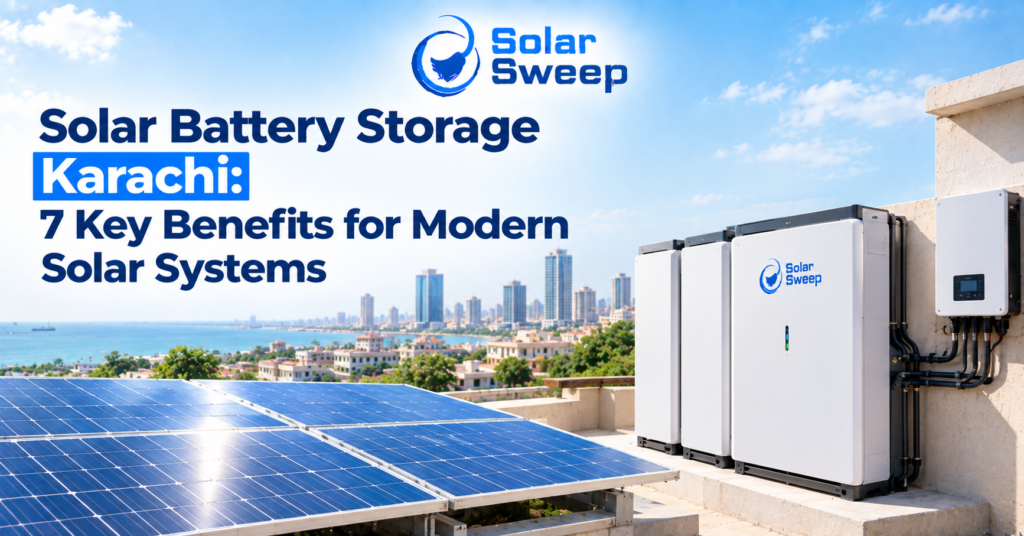
This makes Solar Battery Storage Karachi an increasingly relevant part of modern energy planning.
A solar system can generate substantial electricity during daylight hours, but demand does not always follow the same pattern. Homes may need more electricity after sunset, while businesses can experience changing loads throughout the day. Battery storage creates a way to manage that difference.
For Karachi properties, this can turn solar from a daytime generation system into a more flexible energy resource.
Why Solar Storage Is Becoming More Relevant
Traditional rooftop solar systems focus primarily on generating electricity while the sun is available.
Battery-based systems add another layer.
Instead of immediately using all available solar electricity or sending excess generation elsewhere, the system can store suitable surplus energy and make it available later.
This makes Solar Energy Storage Karachi particularly relevant for users who want greater control over when their solar electricity is consumed.
The change also reflects a wider development in the Pakistani solar market. Storage is becoming a more visible part of discussions around distributed energy, especially as consumers consider how to manage electricity beyond daylight hours.
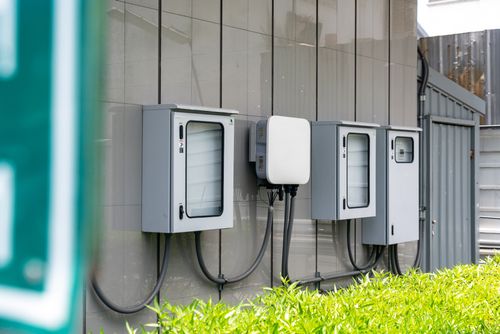
1. Store Daytime Solar for Evening Use
One of the most practical advantages of Solar Battery Storage Karachi is the ability to move some solar energy from daytime into evening consumption.
Solar production naturally falls after sunset, but household and commercial electricity demand can continue or even increase.
A battery can bridge part of that gap.
For example, electricity generated during the afternoon can be stored and later used for lighting, selected appliances, office equipment, cooling systems, or other suitable loads.
This improves the usefulness of the solar energy already being generated instead of requiring every unit of electricity to be consumed immediately.
2. Reduce Dependence on the Grid
Karachi businesses and households often need to manage more than electricity cost alone. Grid interruptions and voltage-related issues can also affect daily operations.
Solar Backup Karachi can provide an additional layer of energy resilience when paired with an appropriately designed hybrid system.
The important point is that battery backup isn’t automatically designed to operate an entire property indefinitely.
A properly engineered system can instead prioritize essential loads.
Critical lighting, networking equipment, security systems, refrigeration, office equipment, pumps, or selected appliances can be placed on backup circuits according to the property’s requirements.
3. Match Solar Generation With Actual Demand
Solar panels generate according to sunlight.
Buildings consume electricity according to human activity and equipment schedules.
Those two patterns don’t always match.
This is where Solar Energy Storage Karachi becomes useful.
A battery can help shift electricity from periods of stronger solar production toward periods when the property needs more power.
That makes the overall system more flexible.
Rather than evaluating a solar installation only by its maximum generation capacity, owners can begin thinking about generation, consumption, storage, and timing as one energy system.
4. Hybrid Systems Offer More Flexibility
Hybrid Solar Systems Karachi combine solar generation with battery storage and grid electricity through an appropriate inverter architecture.
The system can coordinate different power sources depending on operating conditions and configuration.
During strong sunlight, solar can supply active loads while charging the battery.
Later, stored energy can support selected loads.
When solar and battery capacity are insufficient, the grid can remain available where the system design allows it.
This flexibility can be especially useful for businesses that cannot simply stop operations whenever grid power becomes unavailable.
5. Lithium Batteries Are Changing Storage Design
Battery technology has also developed significantly.
Lithium Battery Solar Karachi projects can use lithium-based storage because of characteristics such as high usable capacity, compact installation requirements, and suitability for repeated cycling when correctly specified and managed.
However, choosing a battery should never be based only on advertised capacity.
The design should consider usable energy, expected load, discharge requirements, operating temperature, battery management, inverter compatibility, installation environment, safety provisions, and expected cycling.
A larger battery isn’t automatically a better investment.
The right capacity depends on what the property actually needs.
6. Solar Backup Needs Proper Load Planning
A common mistake is assuming that battery backup should power everything.
That can significantly increase system size and cost.
A better approach begins by identifying essential and non-essential loads.
For a home, this might mean prioritizing lighting, refrigeration, internet equipment, fans, and selected appliances.
For a business, the priorities may include servers, security equipment, networking, emergency lighting, refrigeration, or critical production equipment.
This is where Solar Backup Karachi planning becomes an engineering exercise rather than simply purchasing a battery.
The objective is to provide useful backup without installing unnecessary storage capacity.
7. Storage Makes Solar More Adaptable
The most important development isn’t simply the battery itself.
It’s the change in how people think about solar.
Previously, many projects focused almost entirely on panel capacity.
Modern systems increasingly consider the complete energy cycle:
Generate → Consume → Store → Manage → Monitor
That makes Solar Battery Storage Karachi relevant to a wider range of properties.
A properly planned system can combine solar generation with storage, intelligent energy management, and appropriate backup loads.
For commercial properties, this approach can also support more predictable energy planning.
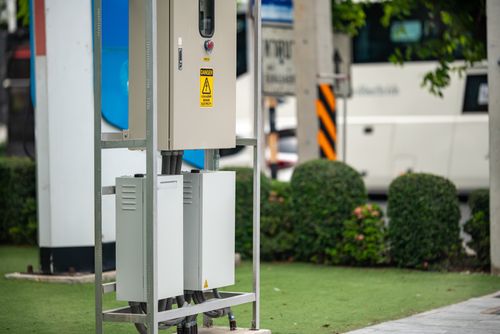
What Karachi Property Owners Should Evaluate
Before installing Hybrid Solar Systems Karachi, property owners should examine their actual electricity profile.
Important questions include:
When is electricity consumed?
A property with high daytime demand may need a different configuration from one with significant evening consumption.
Which loads are essential?
Not every appliance or machine needs battery backup.
How much storage is actually required?
Battery capacity should correspond to the intended backup duration and load.
Where will the battery be installed?
Temperature, ventilation, accessibility, protection, and electrical requirements all matter.
How will the system be monitored?
Performance information can help identify abnormal battery behaviour, charging patterns, and system efficiency.
These questions help prevent over-sizing and ensure that Solar Energy Storage Karachi is designed around actual requirements.
The Role of Professional Solar Planning
Battery storage adds another layer of technical complexity to a solar installation.
Panel capacity, inverter sizing, battery capacity, electrical loads, backup circuits, protection systems, and operating modes need to work together.
For this reason, Solar Battery Storage Karachi should be approached as a complete energy-system design rather than an add-on battery purchase.
SolarSweep can support solar owners with professional solar services focused on keeping systems operating effectively and helping property owners make better use of their renewable-energy investment.
The long-term objective should be straightforward: generate useful solar electricity, maintain system performance, and manage that electricity intelligently.
Karachi’s Solar Market Is Moving Beyond Panels
The next stage of solar adoption is likely to focus increasingly on energy management.
Panels remain the foundation, but storage can change when that electricity becomes available to the property.
For Karachi homeowners and businesses, Solar Battery Storage Karachi can therefore be part of a broader strategy for managing daytime generation, evening consumption, and backup requirements.
Hybrid Solar Systems Karachi provide one route toward this flexibility.
Lithium Battery Solar Karachi solutions can support compact, high-cycle storage when properly specified.
And Solar Backup Karachi planning can help businesses identify which loads actually require continuity.
The important lesson is that battery storage shouldn’t be selected simply because it is the latest solar technology.
It should be selected when the property’s energy pattern, backup requirements, and financial objectives justify it.
FAQs
Is Solar Battery Storage Karachi useful for homes?
It can be useful when a home wants to store daytime solar energy for evening use or maintain selected essential loads during grid interruptions.
Are Hybrid Solar Systems Karachi better for businesses?
Hybrid systems can provide greater operational flexibility by combining solar, batteries, and grid electricity. Suitability depends on the business’s load profile, backup requirements, and budget.
How much Lithium Battery Solar Karachi capacity is required?
Capacity depends on the loads that need backup, required backup duration, solar generation, inverter configuration, and desired operating strategy. There isn’t one suitable battery size for every property.
Can Solar Backup Karachi power an entire building?
It can, but doing so may require substantially more battery and inverter capacity. Many projects instead prioritize critical loads to provide practical backup while controlling system size and cost.