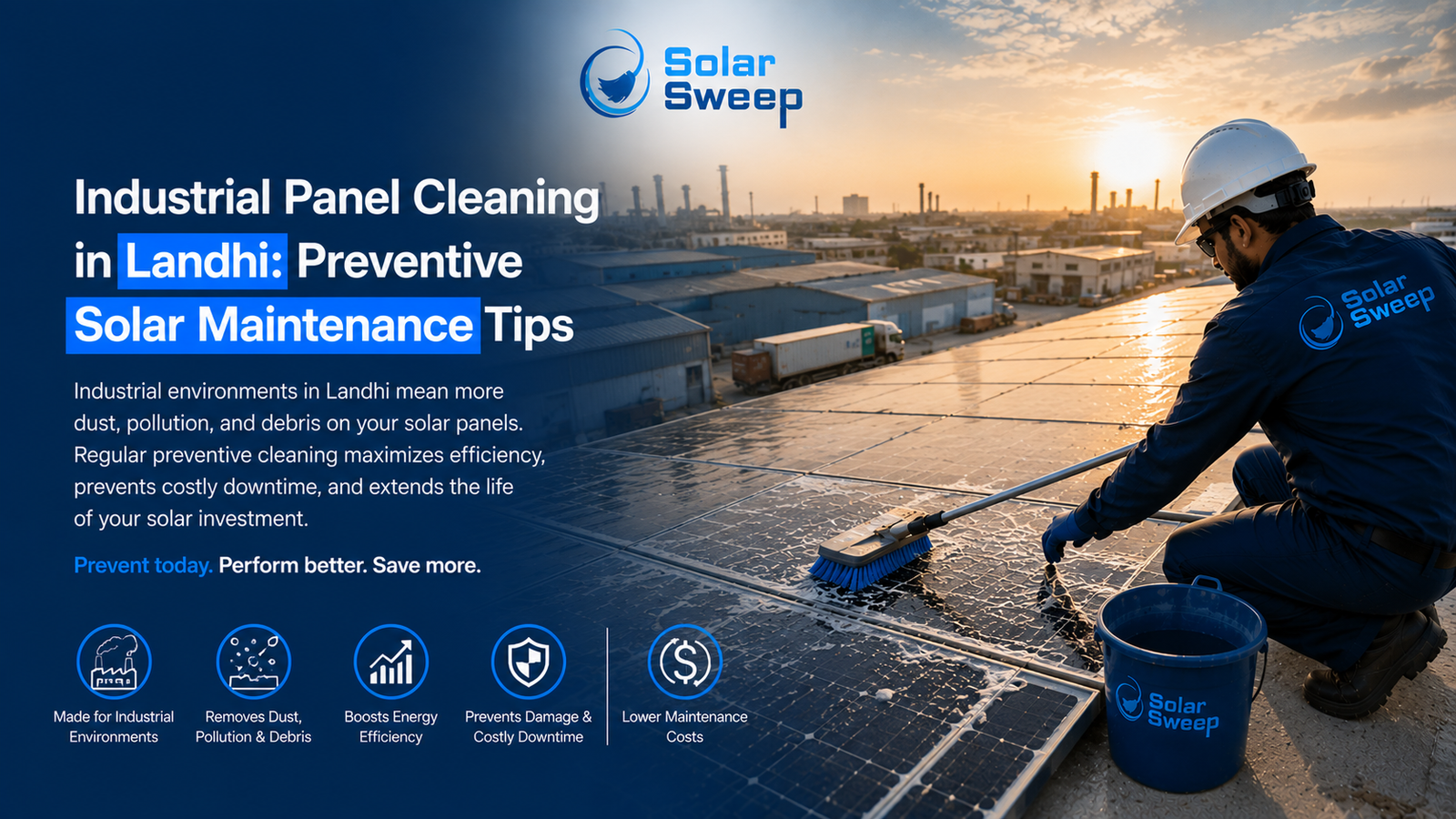
Landhi is one of Karachi’s busiest industrial areas, with factories, warehouses, textile units, food-processing facilities and engineering plants operating under demanding environmental conditions. Dust from roads, production residue, vehicle emissions, bird activity and seasonal humidity can all settle on photovoltaic modules.
Professional industrial solar panel cleaning Landhi should therefore be part of a preventive maintenance programme rather than an emergency response after output falls. Cleaning, inspection and performance monitoring work together to reduce avoidable energy losses and identify developing faults before they interrupt production.
Table of Contents
Why Industrial Solar Panels Need Preventive Care
Large factory systems contain many modules, long cable routes, multiple strings and one or more inverters. A problem affecting one section of the array can remain unnoticed while the rest of the installation continues generating electricity.
The IEA Photovoltaic Power Systems Programme identifies dust, pollution and biological material as common forms of solar-panel soiling. It recommends site-specific cleaning strategies because contamination levels, rainfall patterns and maintenance economics differ between locations.
Planned preventive solar maintenance Karachi helps facility teams move away from guesswork. Instead of washing panels on an arbitrary date, they can use visible conditions, inverter records and production trends to decide when cleaning or technical investigation is justified.
Tip 1: Establish a Performance Baseline
Before deciding how often panels should be cleaned, record normal daily generation under comparable weather conditions. Facility managers should monitor inverter alerts, differences between strings and unusual changes in output during similar sunny periods.
A performance baseline makes factory solar panel cleaning measurable. Production readings taken before and after cleaning can show whether dirt was a major cause of underperformance.
When output remains low after cleaning, the maintenance team can investigate shading, damaged modules, cable faults or inverter problems. Weather, panel temperature and changing factory loads must also be considered. One low-production day isn’t enough to prove that the modules are dirty.
Tip 2: Inspect Before Applying Water
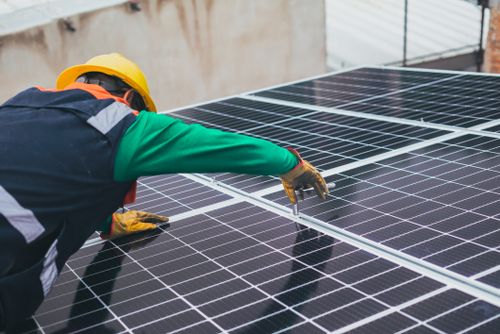
Industrial rooftops may contain cracked modules, loose connectors, exposed wiring or damaged junction boxes. Applying water without first examining the area can create unnecessary electrical and safety risks.
A professional solar system inspection Landhi should begin with a visual survey of the module surfaces, frames, cable routes and accessible electrical components. Technicians should also identify unstable walkways, weak roof sections and unprotected edges before starting work.
Damaged electrical areas should be isolated and referred to qualified personnel. A cleaning crew shouldn’t continue working around exposed conductors simply to complete a scheduled visit.
Tip 3: Match Cleaning Frequency to Factory Conditions
Factories located close to heavy traffic, open plots, chimneys or material-handling areas may experience faster contamination. Textile fibres, cement powder, oily residue and food-processing emissions can behave differently on module glass.
Effective industrial rooftop solar maintenance uses a condition-based schedule. Panels should be inspected regularly, while cleaning frequency should increase when contamination becomes visible or generation trends suggest a soiling problem.
Rain may remove loose dust, but it doesn’t always clear oily pollution, hardened bird droppings or dirt collected along the lower module edge. A post-rain inspection remains useful, particularly for low-tilt arrays and roofs with drainage problems.
Tip 4: Use Module-Safe Cleaning Methods
Cleaning methods should protect the glass, seals, frames and electrical components. Abrasive brushes, detergent powder, metal scrapers and uncontrolled pressure washing can scratch modules or push water towards vulnerable connections.
Safe industrial solar panel cleaning Landhi should use suitable water, soft equipment and controlled pressure while modules are relatively cool. Workers must avoid standing or kneeling on the panels and should follow the manufacturer’s cleaning instructions.
Poor-quality water can leave mineral residue after evaporation. Filtered or low-mineral water may be preferable where previous cleaning has produced visible white spots or streaks.
Tip 5: Check Inverters and Electrical Components
Clean panel glass doesn’t guarantee healthy energy production. Inverter alarms, loose terminals, failed strings, damaged connectors and blocked ventilation can continue limiting output after the array has been washed.
The US Department of Energy describes preventive operation and maintenance as essential for long-term photovoltaic safety and performance. Its guidance connects cleaning with inspection, performance confirmation and corrective maintenance.
A detailed solar system inspection Landhi should review inverter status, ventilation, alarm history, isolators, visible cable supports and earthing components. Qualified technicians should perform electrical testing when monitoring data suggests a faulty string or abnormal connection.
Tip 6: Inspect the Mounting Structure and Roof
Industrial solar arrays depend on rails, clamps, braces, anchors and roof supports. Corrosion, vibration or missing fasteners can affect alignment and create safety concerns even when the system appears to be producing normally.
Planned preventive solar maintenance Karachi should include accessible mounting components, roof penetrations and drainage paths. Technicians should look for loose clamps, coating damage, cracked profiles, standing water and leakage around mounting points.
Structural fasteners shouldn’t be tightened randomly. Torque requirements vary, and excessive tightening can damage panel frames, clamps or composite profiles.
Tip 7: Keep Drainage and Access Routes Clear
Leaves, packaging, textile fibres and production debris can collect underneath elevated arrays. These materials may block drains, trap moisture near supports or obstruct maintenance routes.
Good industrial rooftop solar maintenance preserves clear access to drainage channels, inverters, water tanks, ventilation equipment and emergency routes. Panel rows should remain reachable without workers stepping across modules or unnecessarily disconnecting cables.
New rooftop pipework, exhaust equipment or temporary storage should also be assessed to ensure it doesn’t shade panels or block maintenance access.
Tip 8: Create a Written Maintenance Plan
A written plan should define inspection intervals, cleaning triggers, reporting requirements, responsible personnel and escalation procedures. It should also keep records of inverter alarms, repairs, photographs and production changes.
NREL’s photovoltaic operations and maintenance guidance aims to reduce maintenance costs while improving the effectiveness of the work performed. A documented programme helps teams focus on actual risks rather than repeatedly paying for incomplete services.
Professional factory solar panel cleaning should form one part of this plan. Electrical testing, structural repairs, waterproofing and component replacement need separate scopes when the cleaning team discovers a more serious problem.
What Should an Industrial Cleaning Service Include?
A complete visit should normally include:
- Removal of dust, fibres, bird waste and industrial residue
- Examination of module glass and frames
- Inspection of accessible clamps, rails and supports
- Observation of visible cables and connectors
- Inverter alarm and ventilation checks
- Drainage and rooftop-access observations
- Before-and-after photographs
- A basic comparison of system performance
- Written recommendations for corrective work
Businesses arranging industrial solar cleaning and maintenance should confirm exactly what the quotation covers. Routine cleaning should be clearly separated from specialist electrical, structural or waterproofing repairs.

Common Preventive Maintenance Mistakes
One common mistake is waiting for production to fall sharply before arranging service. Another is repeatedly washing panels without reviewing inverter data or investigating persistent faults.
Poor factory solar panel cleaning methods can also cause damage. Untrained workers may use floor brushes, household detergents or pressure jets near connectors. A low-cost wash becomes expensive when it scratches modules, disturbs cables or causes a rooftop safety incident.
Skipping post-monsoon and post-storm checks is another risk. Wind and rain can move debris, expose damaged seals or worsen already loose components.
Final Thoughts
Industrial solar installations support daytime production, cooling, lighting and other important business loads. Their value depends on more than occasional washing.
A practical industrial rooftop solar maintenance programme combines safe cleaning, system data and documented inspections. Regular industrial solar panel cleaning Landhi, supported by a professional solar system inspection Landhi, helps factories detect preventable losses early and keep their installations ready for dependable long-term operation.
FAQs
How Often Should Landhi Factories Clean Solar Panels?
The interval depends on nearby roads, industrial emissions, roof height, panel tilt and production trends. Inspection and performance data should guide the cleaning schedule.
Can Factory Employees Clean the Panels?
Only properly trained workers with suitable tools, electrical awareness and fall-protection equipment should work around industrial solar arrays.
Is Preventive Maintenance Only About Cleaning?
No. Preventive solar maintenance Karachi also covers performance monitoring, inverter checks, cable observations, drainage review and mounting inspection.
What If Output Stays Low After Cleaning?
A qualified technician should assess inverter alarms, string performance, shading, connectors and module condition. Repeated cleaning won’t correct an electrical fault.