
Uncategorized

construction dust solar panel cleaning Karachi
Uncategorized

Construction Dust Solar Panel Cleaning Karachi: What to Do After Building Work

Renovation, neighbouring construction and rooftop civil work can leave solar panels covered with far more than ordinary household dust. Cement powder, sand, plaster particles, drilling residue, paint overspray and fine construction debris can settle across module glass and around frames within a short period. This makes construction dust solar panel cleaning Karachi particularly important for homes, offices, schools, apartment buildings and commercial properties located near active construction. The challenge isn’t simply making the panels look clean again. Some construction residues become difficult to remove after mixing with moisture or remaining on hot glass. Incorrect cleaning methods can also scratch modules, affect seals or push debris towards electrical components. Why Construction Dust Is Different From Everyday Dust Normal airborne dust often forms a relatively loose layer that can be removed with appropriate washing. Construction activity produces a more complicated mixture of fine and coarse particles. After building or renovation work, solar panels may collect: The presence of cement dust on solar panels deserves particular attention. Fine mineral particles can settle into module corners and become more stubborn when rain, humidity or cleaning water causes them to stick to the glass. How Construction Dust Can Affect Solar Production Solar panels need unobstructed sunlight to generate electricity efficiently. A visible layer of dust and construction residue can reduce the amount of light reaching photovoltaic cells. The IEA Photovoltaic Power Systems Programme identifies soiling as an important cause of photovoltaic underperformance. Its guidance explains that losses depend heavily on local conditions, the type of contamination, rainfall and cleaning practices. Construction residue may also cover panels unevenly. Modules facing a neighbouring building site can become much dirtier than those on another section of the roof. For this reason, post-construction solar cleaning should ideally be followed by a review of inverter generation. If output remains unexpectedly low after cleaning, another electrical, shading or equipment issue may need investigation. Problem 1: Dry Cement Dust Can Scratch the Surface A heavily dusty panel may look easy to clean with a dry cloth or broom. This can be risky. Construction dust may contain hard mineral particles. Rubbing these particles across solar glass can create abrasive action, particularly when rough brushes or dirty cleaning cloths are used. Safe solar panel dust removal should avoid aggressive dry scrubbing. Loose debris should first be removed carefully without forcing particles across the glass. Module-safe tools and suitable water can then be used to clean the remaining contamination. Problem 2: Cement Residue Can Harden After Getting Wet Loose cement powder and hardened cement stains require different approaches. If cement dust mixes with rainwater, rooftop washing or humidity, it can become more firmly attached to the surface. Owners may then be tempted to use blades, metal scrapers or strong chemicals. That can create greater damage than the original dirt. When cement dust on solar panels has hardened, the deposit should first be assessed. Technicians need to determine whether it is cement residue, paint, sealant, waterproofing material or another contaminant before deciding how to remove it. Stubborn deposits should be softened gradually rather than attacked with abrasive tools. Problem 3: High-Pressure Washing Can Create New Risks Pressure washing may seem like the fastest way to clean a rooftop covered with construction debris, but photovoltaic systems contain components that shouldn’t be treated like concrete floors. Junction boxes, connectors, cable routes and module seals can be vulnerable to inappropriate water pressure. The Trina Solar module user manual recommends soft cleaning tools and suitable water while warning against methods that may damage the glass or module components. Professional construction dust solar panel cleaning Karachi should therefore use controlled rinsing instead of assuming that more pressure produces better results. Problem 4: Construction Workers May Damage Modules Building work around an existing solar array creates risks beyond dust. Workers may lean ladders or building materials against panels, step between narrow rows, place tools on modules or move cables to access another part of the roof. Solar panels aren’t designed as walking surfaces. After significant renovation, post-construction solar cleaning should include a visual inspection for: Cleaning without checking for physical damage may allow a problem created during construction to remain unnoticed. Problem 5: Debris Can Collect Under the Array Construction contamination doesn’t remain only on top of the panels. Plastic packaging, tile pieces, drilling waste, cable offcuts and small pieces of rubble can become trapped beneath the array. This material can restrict roof drainage, interfere with cables or accumulate around mounting bases. The U.S. Department of Energy recommends routine inspection, cleaning, debris removal and corrective maintenance as part of managing existing photovoltaic systems. A complete professional solar cleaning Karachi service should therefore examine accessible areas beneath the panels as well as the glass surface. What Safe Post-Construction Cleaning Should Include A professional service should begin by identifying the contamination instead of immediately applying water or chemicals. A practical process can include: Proper solar panel dust removal should be gradual and controlled. The objective is to remove contamination without introducing scratches, electrical problems or roof damage. Cleaning During Cooler Hours Matters Karachi rooftop temperatures can become intense during the afternoon. Cleaning extremely hot panels can cause water to evaporate very quickly, making it harder to rinse away loosened dirt before new marks form. Applying much cooler water to very hot glass also creates unnecessary temperature stress. Where possible, cleaning should take place early in the morning or later in the day when module surfaces are cooler. Workers should clean manageable sections rather than wetting the complete array and allowing dirty water to dry before it can be rinsed away. Don’t Forget the Mounting Structure Construction workers may accidentally move or damage parts of the solar mounting system while carrying building materials or installing new rooftop equipment. After construction, accessible structural components should be checked for: The structure shouldn’t be modified simply to create more room for building work. Braces, clamps and supports form part of the original load path. If something has been removed or changed, it should be assessed before the


solar panel algae removal Karachi
Uncategorized

Solar Panel Algae and Mold Issues: What Karachi Solar Owners Should Know

Dust and bird droppings are easy to recognise on solar panels. Biological contamination is less obvious. Some rooftop systems develop green, brown, black or patchy surface growth around module edges, shaded areas or locations where moisture remains for longer periods. Property owners may describe this as algae, mold or mildew, although the actual contamination can include fungi, bacteria, phototrophic microorganisms and other material forming a surface biofilm. For anyone considering solar panel algae removal Karachi, the first step is understanding that this isn’t always ordinary dirt. Biological growth can adhere more strongly to glass than loose dust and may return when the conditions encouraging it remain unchanged. What Is Biological Soiling? Soiling is the accumulation of material on the surface of photovoltaic modules. Dust, pollution, sea salt, pollen, leaves and bird waste are common examples, but biological material can also contribute. The IEA Photovoltaic Power Systems Programme identifies biological debris and growth among the forms of photovoltaic soiling that can reduce energy yield. IEA PVPS estimates that soiling overall is responsible for average global energy losses of approximately 4% to 7%, although losses at an individual site can be much higher or lower depending on conditions. Biological soiling solar panels can involve microorganisms attaching to the glass and combining with dust and organic material. Over time, this mixture may develop into what is known as a biofilm. Is It Really Algae or Mold on Solar Panels? Not every green or dark patch on a solar module is necessarily algae or mold. A green mark could be organic residue, pollen, lichen or another environmental contaminant. Dark staining may involve fungi, pollution, mineral residue or a combination of materials. A study published in the Journal of Environmental Management examined microbial colonisation of photovoltaic panels and found that fungi, bacteria and some phototrophic organisms could form part of surface biofilms. In that study, increasing biological colonisation was associated with measurable reductions in photovoltaic output over time. This research doesn’t mean every Karachi installation will develop the same organisms or experience the same losses. Climate, panel tilt, moisture, pollution and cleaning history differ considerably between sites. However, visible mold on solar panels or recurring organic-looking growth shouldn’t simply be ignored. Why Can Biological Growth Develop? Microorganisms generally need suitable environmental conditions to survive. Solar panels receive intense sunlight, so the centre of a dry, exposed module may not appear like an obvious place for growth. Conditions can be different around edges and shaded sections. Growth may be more likely where: A developing solar panel biofilm can combine microorganisms with dust and other environmental material, making the deposit harder to remove than ordinary loose dirt. Why Karachi Owners Should Pay Attention Karachi presents a challenging combination of dust, pollution, coastal humidity, bird activity, construction residue and seasonal rain. Not every rooftop will experience biological growth, but systems where moisture and organic debris remain around modules may deserve closer attention. Apartment buildings, schools, hospitals, houses with gardens and properties with water tanks or shaded roof sections may have very different micro-environments even within the same neighbourhood. This is why solar panel algae removal Karachi shouldn’t be treated as a standard procedure used identically on every property. Technicians should first examine the location, type of contamination and surrounding conditions. Biological Growth Can Add to Existing Soiling Solar panels rarely experience one type of contamination at a time. A biological layer may exist alongside: This mixture can become more difficult to remove because moisture and organic material may help smaller particles adhere to the module surface. The problem with biological soiling solar panels is therefore not only appearance. Any persistent layer that reduces light transmission has the potential to affect energy production. The actual performance effect should ideally be evaluated using inverter or monitoring data rather than estimated from appearance alone. Warning Signs Solar Owners Should Look For Property owners don’t need to identify microorganisms themselves. They only need to recognise when the panel surface is behaving differently from ordinary dust. Possible warning signs include: Recurring mold on solar panels or algae-like staining should prompt inspection rather than aggressive scrubbing. Why Ordinary Dry Brushing May Not Work Loose dust can often be removed relatively easily. Biofilm is different because microorganisms and organic material can attach strongly to a surface. Trying to scrape stubborn deposits using blades, steel wool, abrasive pads or hard brushes may damage the module glass or protective coating. This is particularly important during professional solar panel cleaning Karachi, where the objective should be to remove contamination without introducing scratches or other long-term damage. A stubborn surface mark doesn’t justify using increasingly aggressive tools. Be Careful With Bleach and Household Chemicals When property owners hear the words algae or mold, bleach may seem like the obvious solution. Solar panels aren’t bathroom tiles. Strong chlorine products, acidic cleaners, solvents and concentrated household chemicals may affect coatings, seals, frames or surrounding rooftop materials. Runoff may also create additional safety and environmental concerns. The appropriate cleaning agent for solar panel algae removal Karachi depends on the module manufacturer’s instructions and the type of contamination. Where biological contamination is suspected, the safest approach is to use the mildest effective method compatible with the installed modules. Cleaning Should Address the Cause Too Removing visible growth is only half the job. If standing water, bird nesting material, blocked drainage or persistent shading creates conditions for repeated contamination, the marks may return. During solar panel algae removal Karachi, technicians should observe the surrounding roof as well as the glass. Useful checks include: Correcting environmental contributors can reduce the chance of recurring contamination. Inspect the System While Cleaning The U.S. Department of Energy recommends preventive photovoltaic operations and maintenance that includes monitoring sites for debris, conducting inspections and performing routine cleaning where appropriate. Cleaning provides an opportunity to observe more than surface condition. Technicians can look for: This makes professional solar panel cleaning Karachi more useful than simply washing the visible glass. Could Biological Growth Cause Hot Spots? Any localised obstruction can create

hard-water stains on solar panels Karachi
Uncategorized

Hard-Water Stains on Solar Panels in Karachi: Problems and Solutions

Solar panels are often washed with whatever water is available at the property. The glass may look clean while it’s wet, but white rings, cloudy patches and visible streaks can appear after the surface dries. These marks are normally caused by minerals left behind when water evaporates. Managing hard-water stains on solar panels Karachi therefore requires a different approach from removing ordinary dust. Repeated washing with mineral-rich water may create more residue, while aggressive scrubbing can scratch the glass or affect protective surfaces. Solar owners need to understand why these stains form, how they may influence performance and which cleaning methods are safer for photovoltaic modules. What Causes Hard-Water Stains? Hard water contains dissolved minerals, commonly calcium and magnesium compounds. When water droplets remain on a warm solar panel, the liquid evaporates while some of the mineral content stays on the glass. Repeated washing can gradually create a visible film, especially along the lower edge of tilted modules or in areas where water collects before drying. These mineral deposits on solar panels may appear as: The problem may become more noticeable when panels are washed during intense heat, left to air-dry or repeatedly cleaned with water containing high levels of dissolved solids. Do Hard-Water Stains on Solar Panels Karachi Reduce Solar Output? A small number of isolated marks may not create a noticeable difference. However, widespread mineral haze can obstruct part of the sunlight reaching the photovoltaic cells, particularly when the residue combines with dust, smoke particles or coastal pollution. The IEA Photovoltaic Power Systems Programme identifies dust, pollution and biological debris as major causes of solar underperformance. Its 2025 fact sheet estimates that soiling causes average global energy losses of approximately 4% to 7%, although the actual effect depends heavily on site conditions and cleaning practices. Hard-water residue can also make the glass appear dull and provide a rougher surface on which new dirt collects. Professional solar panel cleaning Karachi should therefore assess the mineral film together with the surrounding dust rather than treating each contaminant separately. Owners should still avoid assuming that every production decline is caused by dirty glass. Temperature, cloud cover, grid interruptions, inverter faults, shading and electrical problems may also influence generation. Why More Tap Water May Make the Problem Worse One of the most common responses to visible water spots is to wash the panels again. This may temporarily improve their appearance, but the stains can return when the new water dries. If the supply contains significant dissolved minerals, every rinse may leave another thin layer behind. Over time, repeated washing can create more stubborn residue. This is why solar panel water spot removal should begin with an assessment of the water source. Water supplied from tanks, boreholes or other local sources may have very different mineral content, even within the same part of Karachi. A basic sediment filter may remove sand or suspended particles, but it won’t necessarily remove dissolved calcium, magnesium or salts. Safe Water Quality for Professional Solar Panel Cleaning Karachi The quality of the cleaning water matters almost as much as the cleaning tool. The Canadian Solar module installation manual recommends water with low mineral content and a near-neutral pH. It also advises using a soft, non-abrasive implement during the cooler part of the day rather than scraping dry contamination. Where the regular supply repeatedly leaves spots, solar cleaning with deionized water may provide a better final rinse. Deionization removes a large portion of the electrically charged mineral content that can otherwise remain on the glass after evaporation. Softened, filtered or treated water may also be suitable, but the actual result depends on the treatment method and remaining dissolved solids. How to Remove Existing Water Spots Safely Old mineral spots may feel rough and difficult to remove. This can tempt people to use blades, scouring pads, powdered detergent, bathroom cleaners or strong acidic products. These methods can create a bigger problem than the original stain. Safe solar panel water spot removal should normally follow this process: The process should begin with a small test area. If the deposit doesn’t respond to an approved cleaning method, technicians shouldn’t immediately switch to abrasive tools. Why Panels Should Be Cleaned During Cooler Hours Karachi rooftops can become extremely hot during the afternoon. Applying much cooler water to heated glass creates unnecessary thermal stress and causes the water to evaporate rapidly. Fast evaporation also gives technicians less time to rinse away loosened minerals before they dry again. The Trina Solar module user manual recommends soft water, a controlled pH range and soft, non-conductive cleaning tools. It also warns against methods that may scratch the glass or damage the frame. For this reason, professional solar panel cleaning Karachi should usually be scheduled early in the morning or later in the day. Panels should be cleaned in manageable sections so each area can be washed and rinsed before it becomes hot again. Workers should never stand or kneel on modules, and high-pressure water shouldn’t be directed towards connectors, junction boxes or visibly damaged seals. Can Vinegar or Household Glass Cleaner Be Used? Online cleaning advice often recommends vinegar, glass cleaner, bathroom descaler or other household chemicals. These products may dissolve mineral residue, but compatibility depends on concentration, panel construction, sealant materials and manufacturer guidance. A chemical considered safe for a home window isn’t automatically suitable for solar-module coatings, aluminium frames or nearby electrical parts. Owners should avoid experimenting with strong acids, alkaline cleaners or mixed chemicals. A trained provider should use the mildest effective approach and follow the cleaning instructions for the installed panel brand. Preventing Mineral Stains From Returning Preventing stains is usually easier than removing an established mineral film. Property owners can reduce recurring mineral deposits on solar panels by: For sites with repeated spotting, solar cleaning with deionized water can become part of the regular maintenance process instead of being used only after severe staining appears. How Often Should Stained Panels Be Cleaned? There’s no single schedule for every solar installation. Cleaning

solar maintenance contracts Karachi
Uncategorized

Annual Solar Maintenance Contracts for Karachi Businesses

Commercial solar systems are expected to reduce electricity costs for years, but they can’t deliver consistent results without planned care. Karachi’s dust, construction activity, traffic pollution, coastal humidity, bird droppings and seasonal rain can affect panels, cables, inverters and mounting components. Professional solar maintenance contracts Karachi give businesses a structured way to manage these risks. Instead of arranging a technician only after production falls or an inverter shuts down, the property receives scheduled cleaning, inspection, reporting and technical follow-up. A documented commercial solar maintenance plan can help offices, warehouses, factories, hospitals, schools and retail properties protect their investment while reducing unexpected downtime. Why Reactive Maintenance Can Cost More Some businesses wait until their electricity bill rises or the inverter displays a fault. By then, the system may have been underperforming for weeks. A dirty array may continue producing electricity at a reduced level, while a loose cable or blocked inverter vent may gradually become a more serious problem. Preventive solar maintenance focuses on finding these conditions before they interrupt normal operations. It combines scheduled work with performance monitoring, allowing maintenance decisions to be based on evidence rather than guesswork. The US Department of Energy’s photovoltaic operations and maintenance guidance recommends a documented O&M plan covering responsible parties, system records, inspections, performance monitoring and corrective work. What Should a Maintenance Contract Cover? The exact scope depends on system capacity, roof type, location, equipment and business operating hours. However, a reliable commercial solar maintenance plan should normally include: An annual solar system inspection should also separate routine maintenance from repairs requiring specialist electrical, roofing or structural work. This prevents customers from assuming that every possible repair is included in a basic service fee. Panel Cleaning and Soiling Control Dust, pollution, salt residue, leaves and biological material can obstruct sunlight reaching photovoltaic cells. The system may still operate, but its generation can gradually decline. The IEA Photovoltaic Power Systems Programme identifies soiling as a leading cause of PV underperformance and estimates that it accounts for average global energy losses of approximately 4% to 7%. Actual losses vary considerably by location, weather, system design and cleaning practices. Professional solar panel servicing Karachi should use non-abrasive tools and suitable water. Rough brushes, detergent powder, metal scrapers and forceful spraying near connectors can damage module surfaces or electrical components. Panels should preferably be cleaned during cooler hours. Workers shouldn’t walk or kneel on the modules, and access equipment should be suitable for the building height and roof arrangement. Inverter and Electrical Observations Clean panels alone don’t guarantee strong performance. A system may remain below its expected output because of inverter derating, an offline string, loose terminals, damaged cable insulation or repeated protection trips. During preventive solar maintenance, technicians should review inverter warning lights, fault history, ventilation and available generation data. Visible AC and DC cables should be checked for unsupported sections, damaged clips, sharp-edge contact and exposure to standing water. Detailed electrical testing must be completed by qualified personnel when the inspection reveals burn marks, unusual heat, damaged connectors, repeated shutdowns or unexpected differences between strings. Mounting-Structure Checks The support structure keeps modules aligned and transfers panel weight and wind forces to the building. Loose clamps, missing bolts, weak braces, corrosion and damaged waterproofing can create risks even when generation appears normal. An annual solar system inspection should examine accessible rails, clamps, braces, anchors and mounting bases. Steel frames require checks for rust and coating damage, while aluminium systems should be examined for deformation and loose connections. When an array uses an FRP mounting structure, technicians should look for cracks, impact damage, exposed fibres, movement and weakened connection points. FRP doesn’t rust like ordinary steel, but its bolts, anchors, clamps and joints still require inspection. The NREL Standard Work Specifications state that roof-mounted PV components should be securely installed and that roof penetrations must remain weather-tight. Roof Drainage and Waterproofing Karachi’s monsoon can expose weaknesses around mounting points. Leaves, packaging and windblown debris may collect below panels and restrict water flow towards drains. Maintenance teams should document ponding water, deteriorated sealant, leakage marks and debris around bases. They shouldn’t remove anchors, loosen structural parts or disturb waterproofing without approval. A complete commercial solar maintenance plan should clearly state whether drain clearing and basic roof observations are included. Specialist waterproofing repairs may need a separate quotation. Performance Tracking and Reporting A useful maintenance visit should produce more than clean panels. It should create a record that allows the property owner to understand system condition and output over time. Technicians can record inverter generation before and after service, review alarms and photograph visible defects. Generation should be compared under reasonably similar weather and operating conditions because sunlight, temperature and shading also affect output. A performance report helps businesses decide whether reduced generation came from dirt or whether further testing is necessary. It also supports budgeting by identifying urgent repairs, recommended work and optional improvements separately. How Often Should Service Be Scheduled? There’s no single schedule for every commercial system. A warehouse near an active construction site may collect dust quickly, while another property may remain cleaner for longer. The frequency of solar panel servicing Karachi should reflect: Many properties benefit from regular cleaning visits combined with a detailed yearly technical review. Additional checks may be needed after severe winds, heavy rainfall, roof repairs or equipment installation near the array. Understanding Contract Cost The price of solar maintenance contracts Karachi depends on panel quantity, building height, access, cleaning method, water requirements and technical scope. An elevated commercial array will generally require different safety planning from a low-height residential system. Likewise, a basic cleaning contract won’t provide the same coverage as one that includes inverter analysis, structure inspection and performance reporting. Before approval, request a written annual solar system inspection checklist. It should identify visit frequency, response times, included labour, reporting, repair exclusions and responsibilities for replacement parts. The lowest quotation may not offer the best value if it excludes safe access, inverter review or documentation. How Solar Sweep

industrial solar panel cleaning Landhi
Uncategorized

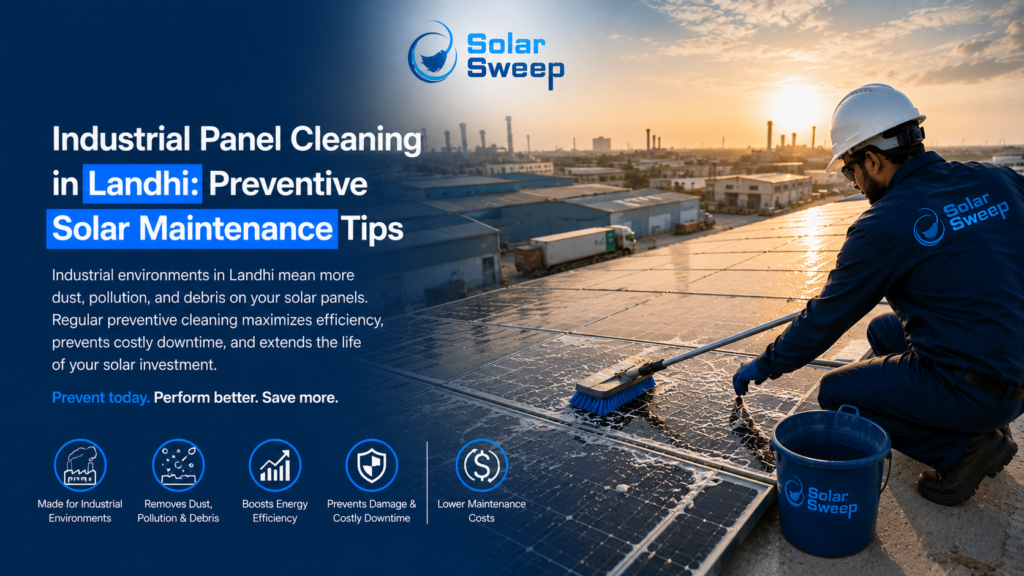
Industrial Panel Cleaning in Landhi: Preventive Solar Maintenance Tips

Landhi is one of Karachi’s busiest industrial areas, with factories, warehouses, textile units, food-processing facilities and engineering plants operating under demanding environmental conditions. Dust from roads, production residue, vehicle emissions, bird activity and seasonal humidity can all settle on photovoltaic modules. Professional industrial solar panel cleaning Landhi should therefore be part of a preventive maintenance programme rather than an emergency response after output falls. Cleaning, inspection and performance monitoring work together to reduce avoidable energy losses and identify developing faults before they interrupt production. Why Industrial Solar Panels Need Preventive Care Large factory systems contain many modules, long cable routes, multiple strings and one or more inverters. A problem affecting one section of the array can remain unnoticed while the rest of the installation continues generating electricity. The IEA Photovoltaic Power Systems Programme identifies dust, pollution and biological material as common forms of solar-panel soiling. It recommends site-specific cleaning strategies because contamination levels, rainfall patterns and maintenance economics differ between locations. Planned preventive solar maintenance Karachi helps facility teams move away from guesswork. Instead of washing panels on an arbitrary date, they can use visible conditions, inverter records and production trends to decide when cleaning or technical investigation is justified. Tip 1: Establish a Performance Baseline Before deciding how often panels should be cleaned, record normal daily generation under comparable weather conditions. Facility managers should monitor inverter alerts, differences between strings and unusual changes in output during similar sunny periods. A performance baseline makes factory solar panel cleaning measurable. Production readings taken before and after cleaning can show whether dirt was a major cause of underperformance. When output remains low after cleaning, the maintenance team can investigate shading, damaged modules, cable faults or inverter problems. Weather, panel temperature and changing factory loads must also be considered. One low-production day isn’t enough to prove that the modules are dirty. Tip 2: Inspect Before Applying Water Industrial rooftops may contain cracked modules, loose connectors, exposed wiring or damaged junction boxes. Applying water without first examining the area can create unnecessary electrical and safety risks. A professional solar system inspection Landhi should begin with a visual survey of the module surfaces, frames, cable routes and accessible electrical components. Technicians should also identify unstable walkways, weak roof sections and unprotected edges before starting work. Damaged electrical areas should be isolated and referred to qualified personnel. A cleaning crew shouldn’t continue working around exposed conductors simply to complete a scheduled visit. Tip 3: Match Cleaning Frequency to Factory Conditions Factories located close to heavy traffic, open plots, chimneys or material-handling areas may experience faster contamination. Textile fibres, cement powder, oily residue and food-processing emissions can behave differently on module glass. Effective industrial rooftop solar maintenance uses a condition-based schedule. Panels should be inspected regularly, while cleaning frequency should increase when contamination becomes visible or generation trends suggest a soiling problem. Rain may remove loose dust, but it doesn’t always clear oily pollution, hardened bird droppings or dirt collected along the lower module edge. A post-rain inspection remains useful, particularly for low-tilt arrays and roofs with drainage problems. Tip 4: Use Module-Safe Cleaning Methods Cleaning methods should protect the glass, seals, frames and electrical components. Abrasive brushes, detergent powder, metal scrapers and uncontrolled pressure washing can scratch modules or push water towards vulnerable connections. Safe industrial solar panel cleaning Landhi should use suitable water, soft equipment and controlled pressure while modules are relatively cool. Workers must avoid standing or kneeling on the panels and should follow the manufacturer’s cleaning instructions. Poor-quality water can leave mineral residue after evaporation. Filtered or low-mineral water may be preferable where previous cleaning has produced visible white spots or streaks. Tip 5: Check Inverters and Electrical Components Clean panel glass doesn’t guarantee healthy energy production. Inverter alarms, loose terminals, failed strings, damaged connectors and blocked ventilation can continue limiting output after the array has been washed. The US Department of Energy describes preventive operation and maintenance as essential for long-term photovoltaic safety and performance. Its guidance connects cleaning with inspection, performance confirmation and corrective maintenance. A detailed solar system inspection Landhi should review inverter status, ventilation, alarm history, isolators, visible cable supports and earthing components. Qualified technicians should perform electrical testing when monitoring data suggests a faulty string or abnormal connection. Tip 6: Inspect the Mounting Structure and Roof Industrial solar arrays depend on rails, clamps, braces, anchors and roof supports. Corrosion, vibration or missing fasteners can affect alignment and create safety concerns even when the system appears to be producing normally. Planned preventive solar maintenance Karachi should include accessible mounting components, roof penetrations and drainage paths. Technicians should look for loose clamps, coating damage, cracked profiles, standing water and leakage around mounting points. Structural fasteners shouldn’t be tightened randomly. Torque requirements vary, and excessive tightening can damage panel frames, clamps or composite profiles. Tip 7: Keep Drainage and Access Routes Clear Leaves, packaging, textile fibres and production debris can collect underneath elevated arrays. These materials may block drains, trap moisture near supports or obstruct maintenance routes. Good industrial rooftop solar maintenance preserves clear access to drainage channels, inverters, water tanks, ventilation equipment and emergency routes. Panel rows should remain reachable without workers stepping across modules or unnecessarily disconnecting cables. New rooftop pipework, exhaust equipment or temporary storage should also be assessed to ensure it doesn’t shade panels or block maintenance access. Tip 8: Create a Written Maintenance Plan A written plan should define inspection intervals, cleaning triggers, reporting requirements, responsible personnel and escalation procedures. It should also keep records of inverter alarms, repairs, photographs and production changes. NREL’s photovoltaic operations and maintenance guidance aims to reduce maintenance costs while improving the effectiveness of the work performed. A documented programme helps teams focus on actual risks rather than repeatedly paying for incomplete services. Professional factory solar panel cleaning should form one part of this plan. Electrical testing, structural repairs, waterproofing and component replacement need separate scopes when the cleaning team discovers a more serious problem. What Should an Industrial Cleaning

bird droppings on solar panels Karachi
Uncategorized

Bird Droppings on Solar Panels in Karachi: Problems and Solutions

Pigeons, crows and other birds often rest on parapets, water tanks, antennas and elevated solar frames across Karachi. Their droppings can land directly on photovoltaic modules or collect near panel edges. Unlike loose dust, this contamination may dry into a hard patch that ordinary rain doesn’t remove. Managing bird droppings on solar panels Karachi requires more than spraying the roof with water. Owners need a safe removal method, inspection of affected modules and practical measures that reduce repeated fouling without damaging panel frames or restricting ventilation. Problem 1: Localised Shading Reduces Performance Bird waste normally covers one section of a module instead of creating an even film. That concentrated obstruction matters because photovoltaic cells are electrically connected, so heavy shading over a small area can limit part of the module’s output. The IEA Photovoltaic Power Systems Programme’s soiling guidance identifies bird droppings on solar panels Karachi as a type of photovoltaic soiling and recommends site-specific cleaning decisions based on contamination, system design and economics. Solution: Remove Deposits Promptly Schedule solar bird dropping removal when deposits become visible rather than waiting for the complete array to look dirty. Early treatment prevents dust and pollution from sticking to the waste and making it harder to remove. Owners should also compare daily generation with previous clear days. A decline may justify inspection, although output can also change because of clouds, temperature, shading or electrical faults. Problem 2: Persistent Deposits Can Create Hot Areas When part of a module is shaded, affected cells may operate differently from surrounding cells. Under some conditions, this mismatch contributes to local heating. A study published in Scientific Reports found higher module temperatures and reduced performance under bird-dropping conditions. The results show why persistent and concentrated contamination deserves attention instead of being treated as a harmless surface mark. This doesn’t mean every small mark will immediately damage a panel. However, solar hotspot prevention includes removing visible obstruction and investigating modules that continue showing abnormal temperature or output after cleaning. Solution: Inspect After Cleaning Technicians should check the glass, frame and visible cell area for discolouration, cracks or burn-like marks. Larger commercial systems may justify infrared thermography when repeated fouling or unexplained production losses occur. A hot area can have several causes, including cell damage, poor connections and electrical mismatch, so diagnosis shouldn’t rely on appearance alone. Problem 3: Dried Droppings Are Hard to Remove Safely Bird waste can harden under Karachi’s heat and attach strongly to module glass. Scraping it with a blade, metal tool or rough pad may scratch the surface or affect its protective coating. Professional solar panel cleaning Karachi should use module-safe tools and proper roof access, especially where panels are installed near edges or on elevated structures. Solution: Soften Before Wiping The deposit should first be soaked with clean water and allowed to soften. A soft microfiber pad or non-abrasive brush can then loosen it with light pressure. Cleaning should take place while modules are cool, usually earlier in the morning or later in the day. Applying cold water to extremely hot glass may create unnecessary thermal stress. High-pressure jets shouldn’t be aimed at junction boxes, connectors or damaged seals. Workers must not stand or kneel on modules. Manufacturer instructions should take priority when they specify approved tools, water quality or cleaning products. Problem 4: Rain Isn’t a Complete Cleaning Plan Karachi’s rain can remove loose dust, but sticky bird waste may remain. Rainwater can also move dirt towards the lower module edge and leave streaks or mineral deposits after evaporation. Waiting for the monsoon isn’t a dependable solar bird dropping removal strategy, particularly on low-tilt arrays or beneath common bird-perching points. Solution: Use Condition-Based Cleaning Inspect the array every few weeks from a safe position and review inverter production regularly. Cleaning frequency should reflect actual bird activity, dust levels, roof design and panel tilt. A property with water tanks, ledges or nearby feeding areas may need more frequent attention than another building in the same neighbourhood. Cleaning based on actual conditions is more practical than using the same fixed schedule for every site. Problem 5: Birds May Nest Beneath the Array Droppings on the glass can signal a larger issue. Birds may enter beneath elevated panels and bring nesting material, feathers and food debris. This material can collect near cables, block roof drainage and make future maintenance more difficult. Nesting birds may also disturb unsupported wires or hide existing cable damage. Effective bird proofing solar panels should use humane exclusion rather than harmful control. Any solution must preserve airflow and allow technicians to reach the modules, wiring and mounting system for future work. Solution: Install Compatible Exclusion Measures Suitable perimeter mesh or another professionally designed barrier may stop birds from entering beneath the modules. Fixings shouldn’t require drilling into panel frames unless the manufacturer permits it, and barriers shouldn’t press against cables or trap leaves. Loose netting, dangling wires and badly positioned spikes can create new risks. Safe bird proofing solar panels requires an assessment of roof layout, bird behaviour, drainage and maintenance access. The roof should be cleaned and inspected before exclusion is installed so nests, debris or damaged wiring aren’t left hidden underneath the array. What a Professional Service Should Include A complete solar panel cleaning Karachi visit for bird contamination should cover: The US Department of Energy’s photovoltaic maintenance guidance treats cleaning, inspection, performance review and corrective work as connected parts of maintaining an existing solar system. The quotation should explain whether the service only covers cleaning or also includes inverter checks, structural observations, electrical testing and bird-control measures. When Is Technical Testing Needed? Arrange further testing when a module continues producing less after cleaning, shows discolouration or repeatedly develops a hot area. Qualified technicians may check: This supports solar hotspot prevention by separating surface contamination from an electrical or module defect. Repeated cleaning won’t repair faulty equipment. Choosing a Karachi Cleaning Provider People arranging professional solar panel cleaning and maintenance should confirm that bird waste will be softened rather

post-monsoon solar maintenance Karachi
Uncategorized

Post-Monsoon Solar Maintenance in Karachi for Commercial Properties

Karachi’s monsoon can leave commercial rooftop systems covered with mud spots, windblown debris, bird waste and mineral deposits. Heavy rain may also expose loose clamps, damaged cable supports, blocked drains and weak waterproofing around mounting points. Professional post-monsoon solar maintenance Karachi moves beyond a basic rooftop wash. It should combine safe cleaning, electrical inspection, mounting assessment and production analysis so that developing faults are corrected before they increase downtime or repair costs. Why Commercial Systems Need Attention After Rain Commercial arrays contain more panels, longer cable routes and multiple strings or inverters. A small defect can therefore affect a larger section of the installation. Water entry, loose cables or displaced debris may not cause an immediate shutdown, but they can reduce reliability and create safety concerns. A planned commercial solar maintenance Karachi visit gives facility managers a documented record of the system’s condition after weeks of rain, humidity and wind. It also allows current production to be compared with expected performance before the drier months begin. The US Department of Energy recommends post-storm operation and maintenance measures to identify damage, restore safe operation and reduce recovery time after severe weather. Problem 1: Rain Doesn’t Always Clean the Panels Rain can remove loose dust, but it may also create mud streaks when particles mix with water. Dirty runoff can settle along module edges, while bird droppings and oily pollution may remain attached to the glass. Professional rooftop solar cleaning Karachi should begin with a site assessment rather than immediate pressure washing. Technicians should identify hardened contamination, cracked glass and unsafe electrical areas before applying water. Soft, module-safe tools and suitable water should be used while panels are cool. Abrasive pads, detergent powder and high-pressure jets near connectors should be avoided. Workers must never stand or kneel on modules. Problem 2: Moisture Can Expose Electrical Faults Water may enter damaged connectors, poorly sealed enclosures or cracked cable insulation. Inverter warnings, ground-fault trips and unexplained shutdowns after rainfall can show that the system needs more than cleaning. A technical solar panel inspection Karachi should cover visible DC cables, connectors, cable trays, isolators, inverter enclosures and earthing components. Loose cables should be supported, damaged ties replaced and exposed conductors isolated for qualified repair. Repeatedly resetting an inverter without finding the cause can hide a developing fault. The maintenance report should record alarms, affected strings and recommended action. Problem 3: Drains and Mounting Bases Become Blocked Leaves, packaging and windblown debris can collect around mounting bases and roof drains. Standing water may then remain close to anchors, cables or waterproofing joints. During post-monsoon solar maintenance Karachi, technicians should inspect drainage paths without moving structural parts or damaging the roof membrane. Signs of ponding, leakage or seal deterioration should be photographed. Persistent water near cables, metal fittings and electrical equipment can shorten component life and make later maintenance more difficult. Problem 4: Wind Can Loosen Mechanical Components Monsoon winds place repeated forces on panels, clamps, rails and elevated frames. New vibration noises, misalignment or visible movement shouldn’t be ignored. A professional solar panel inspection Karachi should review clamps, rail connections, braces, fasteners and accessible anchors. Technicians should look for missing parts, corrosion, cracked profiles and movement around mounting points. Fasteners shouldn’t be tightened randomly because torque requirements depend on the component and manufacturer’s instructions. Significant movement should be referred to a competent specialist. Problem 5: Output Remains Low After Cleaning A visually clean array can still underperform because of an offline string, inverter derating, cable damage, shading or module faults. A solar system performance check should compare inverter data, recent generation and available historical records. Similar days can be reviewed for unexpected differences, while alarm logs may show when a fault began. NREL’s photovoltaic operations and maintenance guidance is designed to reduce operating and maintenance costs while improving maintenance effectiveness. What the Service Should Include A complete commercial solar maintenance Karachi service should include: The quotation should distinguish inspection from repair. Electrical testing, component replacement, waterproofing and structural corrections may require separate approval. Protecting Commercial Returns Commercial solar systems are financial assets. Reduced generation increases grid dependence and weakens the expected return from the installation. Small defects can also become more expensive when they remain unnoticed. Condition-based rooftop solar cleaning Karachi can control unnecessary visits by linking cleaning with visible contamination and generation trends. It’s more useful than washing panels on an arbitrary date without checking output. The IEA Photovoltaic Power Systems Programme explains that soiling affects photovoltaic yield and that mitigation should reflect local conditions, system design and cleaning economics. When to Book Post-Monsoon Maintenance Arrange a service after the rainy period, after a particularly strong storm or when the system shows: Large properties shouldn’t wait for a full shutdown. Early inspection allows repairs to be planned around business operations. Choosing a Commercial Maintenance Provider A provider should explain its cleaning method, safety controls, inspection scope and reporting process. Property owners arranging Solar Sweep’s commercial solar cleaning and maintenance services should confirm whether the quotation includes inverter review, mounting checks, drainage observations, photographs and performance reporting. The provider should also clarify which faults can be corrected during the visit and which require an electrical, structural or waterproofing specialist. Final Thoughts Commercial owners shouldn’t assume that rainfall has cleaned and tested the complete system. Effective post-monsoon solar maintenance Karachi combines surface cleaning with checks of cables, inverters, mounting components, drainage and production. A documented commercial solar maintenance Karachi programme helps businesses find faults early and protect energy savings. Professional rooftop solar cleaning Karachi, supported by a detailed solar panel inspection Karachi, turns seasonal maintenance into practical asset management. FAQs

Solar panel cleaning Karachi
Uncategorized

Problem That Led to Solar Sweep

A Growing Solar Market With One Missing Service Karachi has always faced energy challenges. Rising electricity costs, power shortages, and increasing demand have encouraged homeowners, businesses, factories, schools, hospitals, and offices to adopt solar energy solutions. This gap in the market led Pir Zawwar, founder of Solar Sweep, to create a dedicated solution focused on professional Solar panel cleaning Karachi services. Solar panels are now common across residential rooftops, commercial buildings, warehouses, and industrial facilities. People invested in solar systems to reduce electricity expenses, improve energy independence, and protect themselves from rising power costs. However, as solar adoption increased, one important area remained overlooked: maintenance. Many customers believed that after installation, their solar systems would continue performing efficiently for years without regular care. The reality was different. Karachi’s environment creates challenging conditions for solar panels, including dust, pollution, humidity, extreme heat, salty coastal air, and bird droppings. Over time, these factors reduce solar efficiency and affect energy generation. The Hidden Challenge Facing Karachi Solar Users Solar panels are designed to absorb sunlight and convert it into electricity. However, when dust and pollution accumulate on the surface, sunlight absorption decreases. Karachi’s environment exposes solar systems to: The problem is often difficult for users to identify. A solar panel may appear clean from a distance while a thin layer of dust slowly reduces performance. Many homeowners and businesses initially blame declining output on inverters, weather conditions, or panel quality. However, in many situations, the actual problem is poor maintenance. Regular solar panel maintenance Karachi services help users protect their investment and ensure that their systems continue delivering expected performance. The Market Gap That Created Solar Sweep Before Solar Sweep, Karachi’s solar industry was mainly focused on installation. Customers could easily find companies offering solar panels, batteries, inverters, and installation packages. However, after installation, many customers struggled to find reliable maintenance support. Some people depended on: Others used unsafe Solar panel cleaning Karachi methods, including rough brushes, chemicals, and improper washing techniques. These approaches created risks such as: Pir Zawwar recognized that Solar panel cleaning Karachi was not simply about removing dust. It required technical understanding, safety procedures, and professional service standards. This realization led to Solar Sweep becoming a professional solar cleaning company focused on protecting solar investments through reliable maintenance solutions. The Vision Behind Solar Sweep Pir Zawwar’s journey in the solar industry began before Solar Sweep was established. Since 2018, he has gained practical experience working with solar-related organizations, including Sky Electric. Through his experience in sales, installation, operations, and maintenance, he developed a deeper understanding of customer challenges. He realized that solar energy is not only about installing panels. A complete solar ecosystem requires: His experience with FRP solar structures also shaped his understanding of durability, innovation, and long-term system performance. With a background in business education through BBA and MBA programs, Pir Zawwar combined technical knowledge with business thinking. This helped him focus on building a professional service brand rather than simply offering cleaning. Why Professional Solar Cleaning Matters Solar panel cleaning Karachi requires more than basic washing. Incorrect methods can damage expensive solar equipment. Professional solar cleaning services Karachi focus on: A professional approach ensures that Solar panel cleaning Karachi improves performance without creating additional risks. For homeowners, regular maintenance provides peace of mind and helps maintain electricity savings. For businesses, proper maintenance becomes even more important because small efficiency losses can create significant financial impacts over time. Supporting Commercial and Industrial Solar Users Large solar systems require consistent attention because they generate significant amounts of energy. Commercial solar panel cleaning helps businesses maintain better performance from their existing solar assets. Factories, offices, warehouses, schools, and hospitals depend on reliable energy production. Reduced panel efficiency can increase operational costs and reduce expected savings. Regular cleaning and maintenance help organizations: Solar Sweep provides solutions designed for residential, commercial, and industrial solar users. Beyond Cleaning: Inspection and Solar Care Solar Sweep’s vision extends beyond cleaning panels. Through solar system inspection services, professionals can identify visible issues such as: Early identification helps customers address problems before they become expensive repairs. This approach transforms solar maintenance from a reactive activity into a preventive solution. Building Trust Through Professional Service Trust is one of the biggest challenges in service businesses. Solar panels are often installed on rooftops, factories, and private properties, meaning customers need confidence in the people handling their systems. Solar Sweep was created around three important principles: Customers need to know who is working on their system, how the work is performed, and what value they receive. A registered and professional service provider offers greater confidence compared to informal cleaning arrangements. The Future of Solar Maintenance in Karachi Pakistan’s solar market will continue growing as businesses and households look for reliable energy alternatives. However, solar installation is only the beginning. Long-term performance depends on proper care. Solar Sweep was created to solve a real market problem: thousands of solar systems were installed, but many were not receiving professional maintenance. Through solar panel maintenance Karachi, solar cleaning services Karachi, and commercial solar panel cleaning, Solar Sweep is helping customers protect their solar investments. The company represents a new approach toward solar ownership — one where cleaning, inspection, awareness, and maintenance become essential parts of the solar journey. Solar Sweep is not just cleaning panels. It is helping Karachi’s solar users achieve better performance, longer system life, and greater value from renewable energy.

commercial solar cleaning Clifton Karachi
Uncategorized

Commercial Solar Cleaning in Clifton Karachi: Cost Savings and Performance

Clifton’s offices, restaurants, clinics, apartment buildings and retail properties increasingly depend on rooftop solar during business hours. These systems operate in an environment affected by traffic pollution, coastal humidity, salt-bearing air, construction dust and bird activity. When contaminants remain on module glass, they reduce light transmission and can lower energy production. Professional commercial solar cleaning Clifton Karachi should be managed as a performance activity rather than an occasional rooftop wash. A sensible schedule can recover avoidable output losses, reveal developing faults and help businesses spend maintenance budgets where they produce measurable value. How Soiling Creates a Hidden Business Cost Solar panels may continue generating electricity even when dirty, so gradual losses can remain unnoticed. Dust often builds unevenly, while bird droppings and debris can create concentrated shading on individual cells or modules. The IEA Photovoltaic Power Systems Programme identifies soiling as an important influence on photovoltaic yield and recommends site-specific mitigation rather than one cleaning schedule for every installation. For a commercial property, reduced output means buying more electricity from the grid or receiving less value from the installed capacity. Regular solar panel cleaning Clifton can recover losses caused by surface contamination, although it won’t correct inverter, wiring or shading faults. Problem: Cleaning Without Performance Data Some businesses wash panels on a fixed monthly date without checking whether cleaning is necessary. Others wait until the array looks severely dirty. Both approaches can increase cost. A better method links cleaning decisions with rooftop solar performance. Facility managers should review daily generation, compare similar weather conditions and note unusual changes. A visual inspection can then confirm whether dust, salt, bird waste or another issue is present. This condition-based approach avoids unnecessary visits during cleaner periods and prevents long periods of lost production during dusty conditions. Solution: Establish a Performance Baseline A baseline should record expected generation for comparable sunny days, inverter status and known shading patterns. The same information should be reviewed after cleaning. When production improves, the business gains evidence that the service addressed soiling. When output remains low, technicians can investigate strings, connectors, inverter settings or module damage instead of repeatedly washing the panels. Planned commercial solar maintenance Karachi should combine visual inspection with production records because appearance alone can’t confirm electrical health. Problem: Coastal Salt and Sticky Pollution Clifton’s coastal air can leave salt-bearing residue on glass, frames and fittings. Pollution mixed with moisture may form a film that light rinsing doesn’t remove, while poor-quality water can leave mineral spots. Technicians should rinse loose particles first, use clean water and avoid detergent powder, metal tools and abrasive pads. Professional commercial solar cleaning Clifton Karachi should take place while panels are cooler, using controlled pressure away from junction boxes and connectors. Problem: Paying for Cleaning That Doesn’t Fix the Fault A clean array can still underperform because of inverter alarms, loose connectors, damaged cables, failed strings or communication errors. Repeated washing without checking these conditions increases operating expense without solving the actual problem. The US Department of Energy includes cleaning, preventive inspection, performance monitoring and corrective work within effective photovoltaic operations and maintenance planning. A complete commercial solar maintenance Karachi visit should therefore review inverter status, visible wiring, cable support, clamps, earthing points and recent generation records. Qualified technicians should complete electrical testing when monitoring data or visible evidence suggests a fault. Measuring the Value of Cleaning Compare generation before and after service under reasonably similar weather and shading conditions. Record energy output, inverter alerts, photographs and recommended repairs. Tracking rooftop solar performance across several visits shows how quickly contamination returns. Businesses should avoid fixed improvement promises because recovery depends on soiling severity and any underlying technical faults. Understanding Commercial Cleaning Cost The quoted fee is only one part of solar cleaning cost Karachi. Businesses should also consider roof access, worker safety, water quality, panel quantity and energy lost while modules remain dirty. Pricing usually depends on panel arrangement, roof height, elevated frames, contamination severity, water treatment and reporting requirements. A low quotation may exclude inverter checks, photographs or safe-access arrangements. For this reason, solar cleaning cost Karachi should reflect the actual site rather than a generic price per panel. Reducing Long-Term Maintenance Spending Businesses can control spending by keeping access paths clear, reviewing generation data and coordinating cleaning with inverter and mounting checks. Combining related tasks in one visit may lower mobilisation costs and reduce disruption. A planned solar panel cleaning Clifton schedule should respond to site conditions rather than habit. The National Renewable Energy Laboratory’s best-practice guidance treats preventive and corrective maintenance as part of managing photovoltaic performance and lifecycle cost. Choosing a Commercial Cleaning Provider A provider should explain its cleaning method, safety controls, water source, inspection scope and reporting process. Businesses comparing commercial solar cleaning and maintenance services should confirm whether the quotation includes photographs, inverter checks, visible cable inspection and performance observations. Reliable commercial solar maintenance Karachi should produce clear findings. The report should distinguish likely cleaning-related losses from electrical or structural concerns requiring further work. Common Costly Mistakes Rough brushes, household detergent, pressure jets and walking on modules can damage panels or seals. Businesses also shouldn’t judge output only from electricity bills; inverter generation data gives a clearer performance measure. Final Thoughts Effective commercial solar cleaning Clifton Karachi is an investment decision based on measurable output, safe methods and sensible timing. Businesses gain more value when cleaning is linked to generation records instead of being performed without evidence. A practical programme also tracks rooftop solar performance over time. This helps Clifton properties protect energy savings without paying for unnecessary or incomplete work. FAQs

solar panel cleaning DHA Karachi
Uncategorized

Solar Panel Cleaning for DHA Karachi Homes: Problems and Solutions

Rooftop solar systems in DHA Karachi face airborne dust, traffic pollution, humidity, coastal salt, bird droppings and intense heat. These conditions can reduce light reaching photovoltaic cells and make electrical or structural defects harder to identify. Professional solar panel cleaning DHA Karachi should be treated as technical maintenance rather than a basic rooftop wash. A safe service combines suitable water, non-abrasive tools, controlled pressure and an inspection of modules, wiring, clamps and inverter performance. Problem 1: Dust and Pollution Reduce Solar Exposure DHA contains busy roads, open plots and ongoing construction. Fine particles settle on module glass and may form a stubborn layer when mixed with moisture or urban pollution. The IEA Photovoltaic Power Systems Programme identifies soiling as a major cause of photovoltaic underperformance and estimates average global energy losses of approximately 4% to 7%. Actual loss at an individual home depends on dirt levels, rainfall, panel tilt and cleaning frequency. Solution: Use Condition-Based Cleaning Homeowners shouldn’t rely only on a fixed monthly schedule. Rooftop solar cleaning Karachi should be arranged when visible buildup appears or production falls compared with similar clear days. Loose dust should be removed gently before rinsing. A soft, module-safe brush or microfiber tool can then lift remaining dirt. Abrasive pads and dry scrubbing should be avoided because trapped grit may scratch the glass. Problem 2: Salt and Humidity Leave Deposits Homes closer to the coast may experience salt-bearing moisture settling on panels, frames and exposed fittings. Salt residue can make glass appear cloudy and may accelerate corrosion on unsuitable metallic parts. Effective coastal solar panel care must address both cleanliness and equipment condition. Spraying modules without proper rinsing may simply move deposits toward the lower frame edge. Solution: Rinse and Inspect Panels should be rinsed with clean water before gentle wiping. Technicians should examine clamps, bolts, cable clips, earthing points and mounting profiles for salt deposits, rust, pitting or loose connections. Corroded fittings should be assessed and replaced when necessary. Painting over corrosion without identifying its cause isn’t a dependable repair. Problem 3: Hard Water Creates Mineral Spots Water quality is often overlooked during DHA solar maintenance. When hard water dries on hot module glass, dissolved minerals can remain as white marks. Repeated use can produce deposits that become difficult to remove. Solution: Use Suitable Water Filtered, demineralised or low-total-dissolved-solids water is preferable where practical. Cleaning should take place early in the morning or later in the day when panels are cooler. The surface shouldn’t be left with standing droplets under intense sunlight. A clean microfiber tool or suitable squeegee can remove excess water without heavy pressure. Problem 4: Hot Panels and Pressure Washing Create Risk Modules can become extremely hot in direct afternoon sunlight. Applying much cooler water creates unnecessary thermal stress. High-pressure jets can also force water toward junction boxes, connectors, seals and roof penetrations. Technical solar panel cleaning DHA Karachi should account for module temperature, electrical safety and rooftop access. Solution: Clean During Cooler Hours Cleaning should be scheduled when panels are cooler. Water must be applied gently and directed away from vulnerable electrical points. Workers should never stand, kneel or place equipment on modules. They should also avoid touching damaged connectors or exposed wiring and use proper fall-protection measures near roof edges. Problem 5: Bird Droppings Cause Localised Shading Bird waste is harder to remove than ordinary dust and can create concentrated shading over part of a cell. Leaves and nesting material may also collect beneath elevated arrays or around roof drains. Routine residential solar maintenance DHA should include panel corners, rails and spaces beneath the array instead of only the visible centre of the glass. Solution: Soften Deposits First Hardened material should be soaked with clean water before gentle removal. Metal scrapers, blades and aggressive chemicals shouldn’t be used. Bird-control accessories must be installed carefully so they don’t shade panels, trap heat, block ventilation or interfere with wiring. Problem 6: Cleaning Doesn’t Correct Electrical Faults A clean array may still underperform because of inverter alarms, damaged cables, shading, loose connectors or mismatched panel strings. This is why DHA solar maintenance should include performance review rather than ending when the glass looks clean. The US Department of Energy explains that proper operation and maintenance can help optimise photovoltaic performance across the system’s service life. Solution: Combine Cleaning With Inspection Technicians should check inverter warnings, daily generation, cable support, connector condition and visible module damage. Electrical testing or thermal imaging may be useful when one section continues producing less power after cleaning. A written record of output before and after service gives the homeowner a practical baseline for future comparisons. How Often Should DHA Homeowners Clean Their Panels? There’s no universal interval. Homes near construction, main roads, trees or frequent bird activity may need shorter cycles. Systems with steeper tilt or lower local dust may remain cleaner for longer. The World Bank’s Global Solar Atlas provides solar-resource data that shows the importance of protecting access to available sunlight. Local inspection and production records, however, should determine the cleaning schedule. A practical coastal solar panel care plan can include visual checks every few weeks, monthly generation reviews, cleaning when buildup becomes noticeable and a technical inspection annually or after severe weather. What Should a Professional Service Include? A complete residential solar maintenance DHA visit should cover: Homeowners arranging solar panel cleaning and maintenance should confirm that the service includes safe-access planning, suitable water, non-abrasive tools, inverter checks and photographs of visible defects. Common Cleaning Mistakes Poor rooftop solar cleaning Karachi practices include using detergent powder, rough brushes, metal scrapers or high-pressure jets near connectors. Cleaning panels at peak afternoon temperature and walking directly on modules can also cause damage or create serious safety risks. Tools used for walls, floors or vehicles shouldn’t be reused on module glass because they may carry grease or abrasive particles. Final Thoughts The best DHA solar maintenance strategy addresses dirt, water quality, module temperature, inverter performance and mounting condition together. A planned residential solar maintenance DHA