
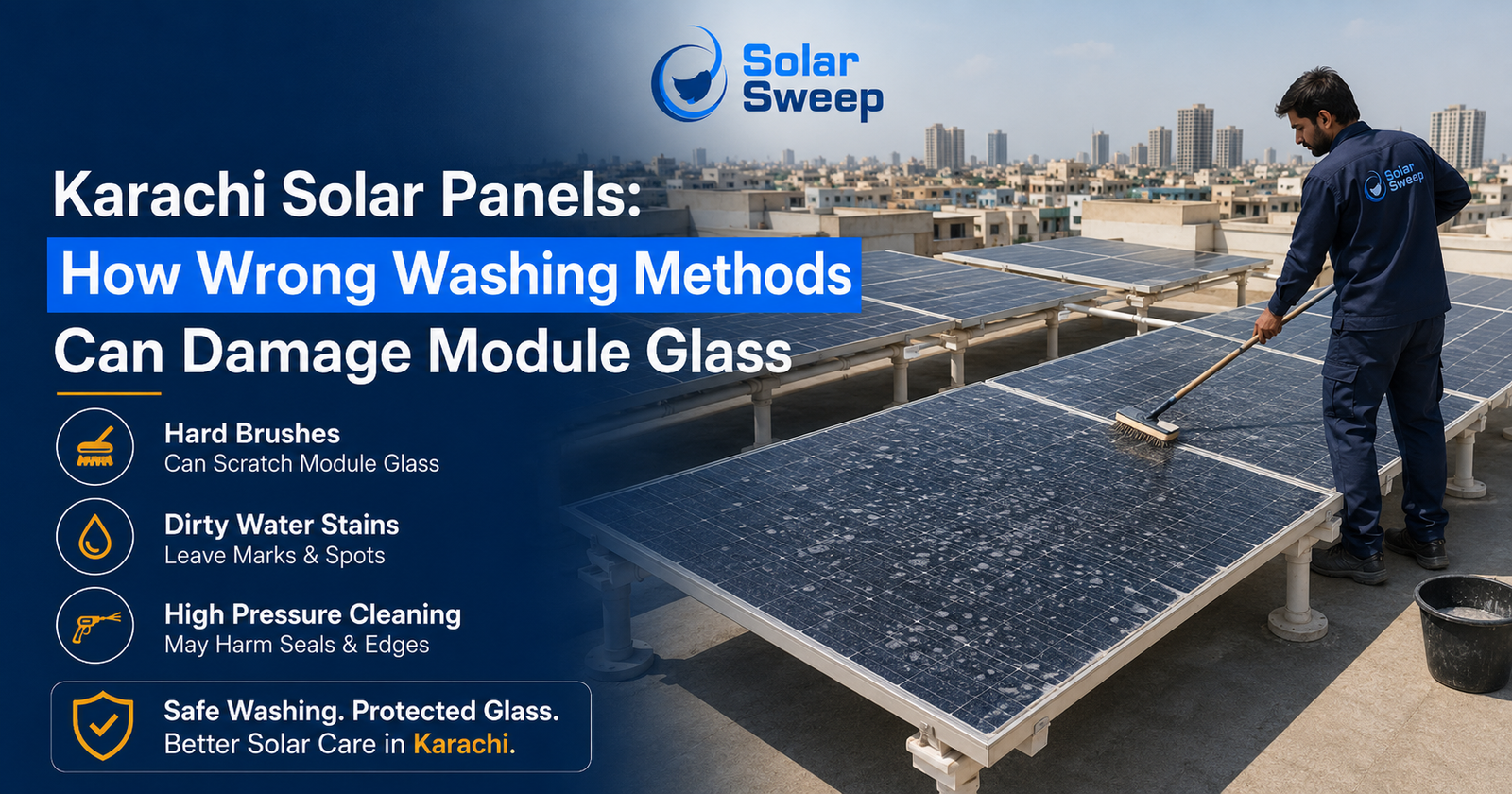
Solar panels are designed for years of outdoor operation, but incorrect washing can affect their glass, anti-reflective coating, and output. Many owners focus only on visible dirt without considering water quality, panel temperature, tools, or pressure. This makes Karachi solar panel washing a technical maintenance task rather than ordinary rooftop washing.
One overlooked problem is hard water solar stains. When mineral-rich water dries on module glass, deposits may remain behind. Incorrect washing can also create solar panel cleaning damage through scratches, coating deterioration, thermal stress, or excessive pressure.
Table of Contents
Why Water Quality Matters for Solar Modules
Tap or bore water can contain dissolved minerals. When it evaporates, minerals may remain as marks or scale. Over repeated washing cycles, hard water solar stains can become harder to remove.
Canadian Solar recommends low-mineral-content water for module washing and notes that high mineral content can leave deposits on module glass, affect the anti-reflective coating, and reduce glass transmittance. This shows why the water source should be considered before panels are washed.
LONGi similarly advises against high-mineral-content water because deposits can accumulate on glass and reduce transmittance. Using suitable water is therefore one practical way to reduce the risk of solar panel cleaning damage.
Mineral Deposits Are Not Ordinary Surface Dirt
Loose contamination may be removed with a soft cleaning method, but mineral residue behaves differently. If water repeatedly dries on the glass, hard water solar stains can build into spotting or scale.
Trying to remove those marks with scouring pads, blades, rough brushes, or aggressive chemicals may create solar panel cleaning damage that is harder to correct than the original residue.
Why Hot Panels Should Not Be Washed Carelessly
Solar modules can become hot while operating under strong sunlight. Applying much cooler water to a hot panel can create a rapid temperature difference across the module.
LONGi’s PV module maintenance guidance states that the temperature difference between cleaning water and the module should not exceed 10°C. It also sets requirements for water quality, pressure, and suitable cleaning tools.
For this reason, Karachi solar panel washing should be planned around module condition and manufacturer guidance rather than simply worker convenience.
Abrasive Tools Can Scratch Module Glass
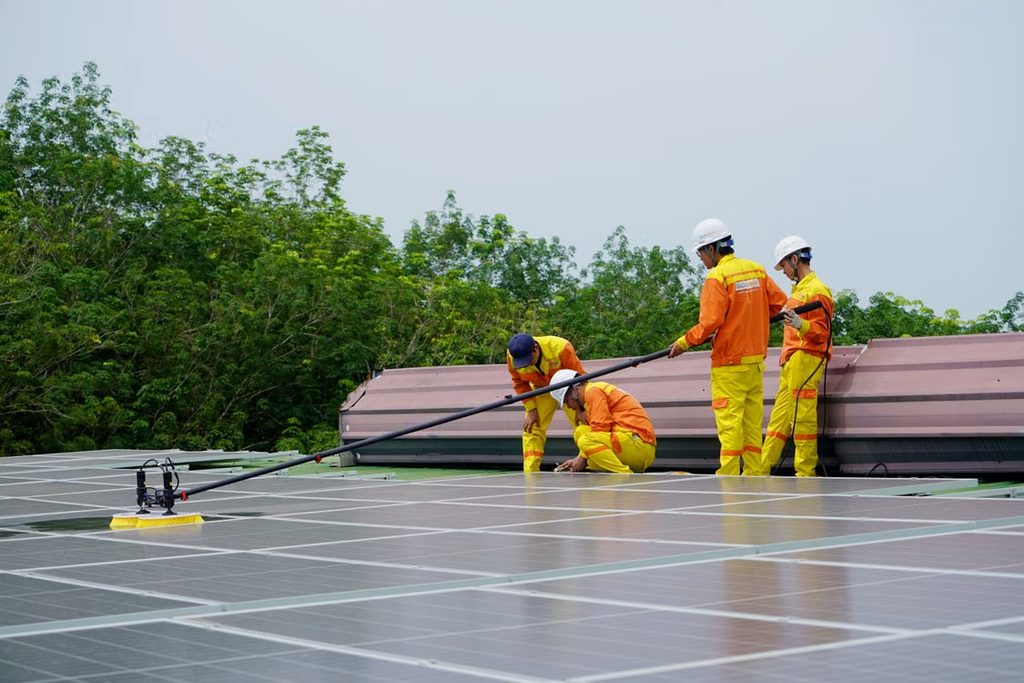
Solar glass should not be treated like flooring or an ordinary outdoor surface. Hard brushes, metal tools, scouring material, and dry rubbing can scratch it. Canadian Solar warns against abrasive cleaning and notes that rubbing dry contamination can create micro-scratches.
Preventing solar panel cleaning damage therefore requires soft, non-abrasive equipment. The same principle applies when dealing with hard water solar stains: using more force is not necessarily safer or more effective.
Better Maintenance Protects a Growing Solar Investment
Pakistan’s rooftop solar market has expanded rapidly. Renewables First reported that net-metered solar capacity reached 6.1 GW in FY2025, rising from 2.5 GW in FY2024—an increase of 144%.
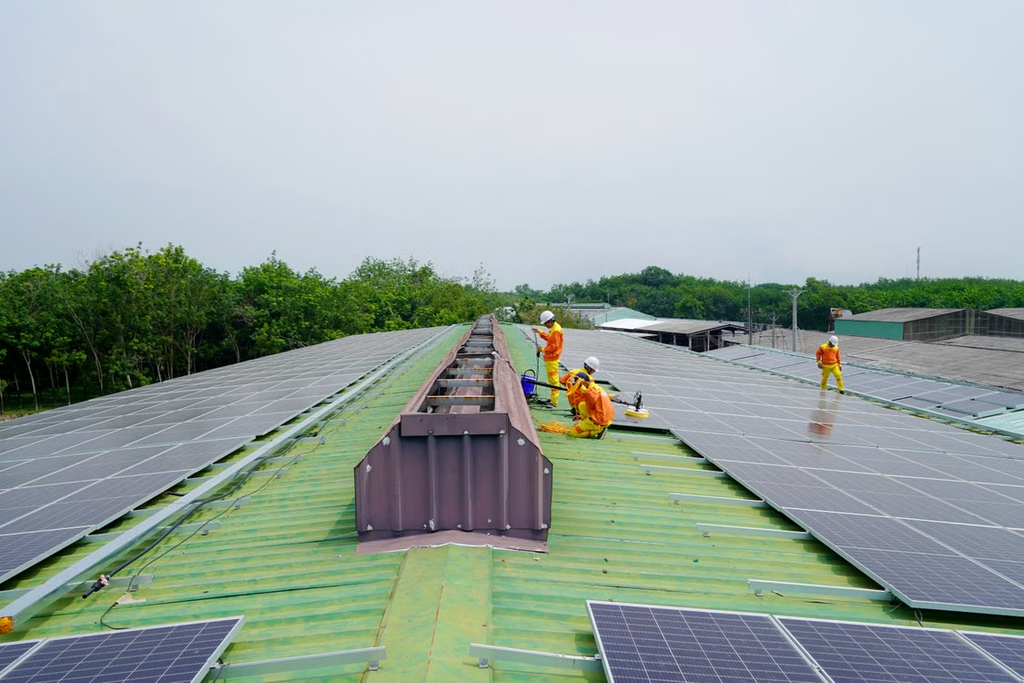
As more properties depend on rooftop generation, maintenance quality becomes increasingly important. Karachi solar panel washing should protect the equipment instead of introducing avoidable wear.
Poor technique can cause solar panel cleaning damage when unsuitable water, harsh chemicals, excessive pressure, or abrasive tools are used. Preventing hard water solar stains can also help preserve the optical clarity of the panel surface over repeated service cycles.
What a Professional Washing Process Should Check
A responsible service should assess water quality, module temperature, glass condition, exposed wiring, access safety, cleaning tools, water pressure, and manufacturer instructions before starting.
Solar Sweep can treat Karachi solar panel washing as controlled PV maintenance rather than basic rooftop washing. The objective should be to clean the module surface without introducing unnecessary mechanical, chemical, or thermal stress.
Follow the Manufacturer, Not a Generic Cleaning Method
Different module brands may specify limits for mineral content, pressure, detergents, tools, and cleaning conditions. Owners should check their panel guidance first.
This approach reduces the chance of solar panel cleaning damage and prevents hard water solar stains from being treated with unsuitable chemicals or abrasive equipment. It also keeps the washing process more consistent with the care requirements of modern PV modules.
Why the Cleaning Method Matters Over Time
A solar system is a long-term investment, so repeated maintenance methods matter. One incorrect wash may not create obvious problems immediately, but repeatedly using mineral-heavy water, rough tools, or unsuitable chemicals can gradually affect the module surface.
A controlled Karachi solar panel washing process considers how panels will respond not only during one service visit but across years of operation. Preventing hard water solar stains from recurring is more effective than repeatedly using aggressive methods to remove them later.
For system owners, this means choosing a process based on PV-module requirements rather than treating solar panels like ordinary rooftop glass.
FAQs
Can Karachi tap or bore water leave marks on solar panels?
Yes. If the water contains significant dissolved minerals and dries on the glass, it can leave mineral residue. The level depends on the actual water source and mineral content.
Can hard-water deposits affect solar output?
They can if mineral deposits accumulate enough to reduce glass transmittance. Module manufacturers therefore provide specific water-quality guidance for washing.
Is midday a good time to wash solar panels?
Not necessarily. Washing very hot modules with much cooler water can introduce thermal stress. Manufacturer instructions regarding module and water temperature should be followed.
Can stubborn marks be removed with a hard brush?
Abrasive tools should be avoided. Soft, non-abrasive equipment and cleaning methods permitted by the module manufacturer are safer choices for stubborn residue.