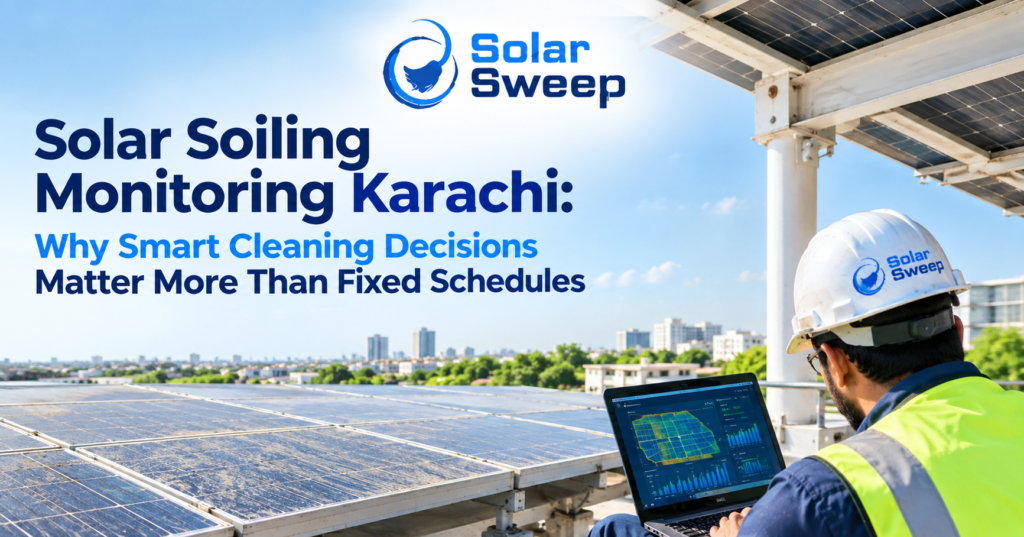
Solar power has emerged as a significant energy source in Pakistan, particularly in urban and industrial centers where electricity bills and the problem of load shedding are ever on the rise. Solar systems are now viewed as an investment in the long term, not simply an energy source, whether it is installed on residential rooftops or as a large-scale commercial installation.
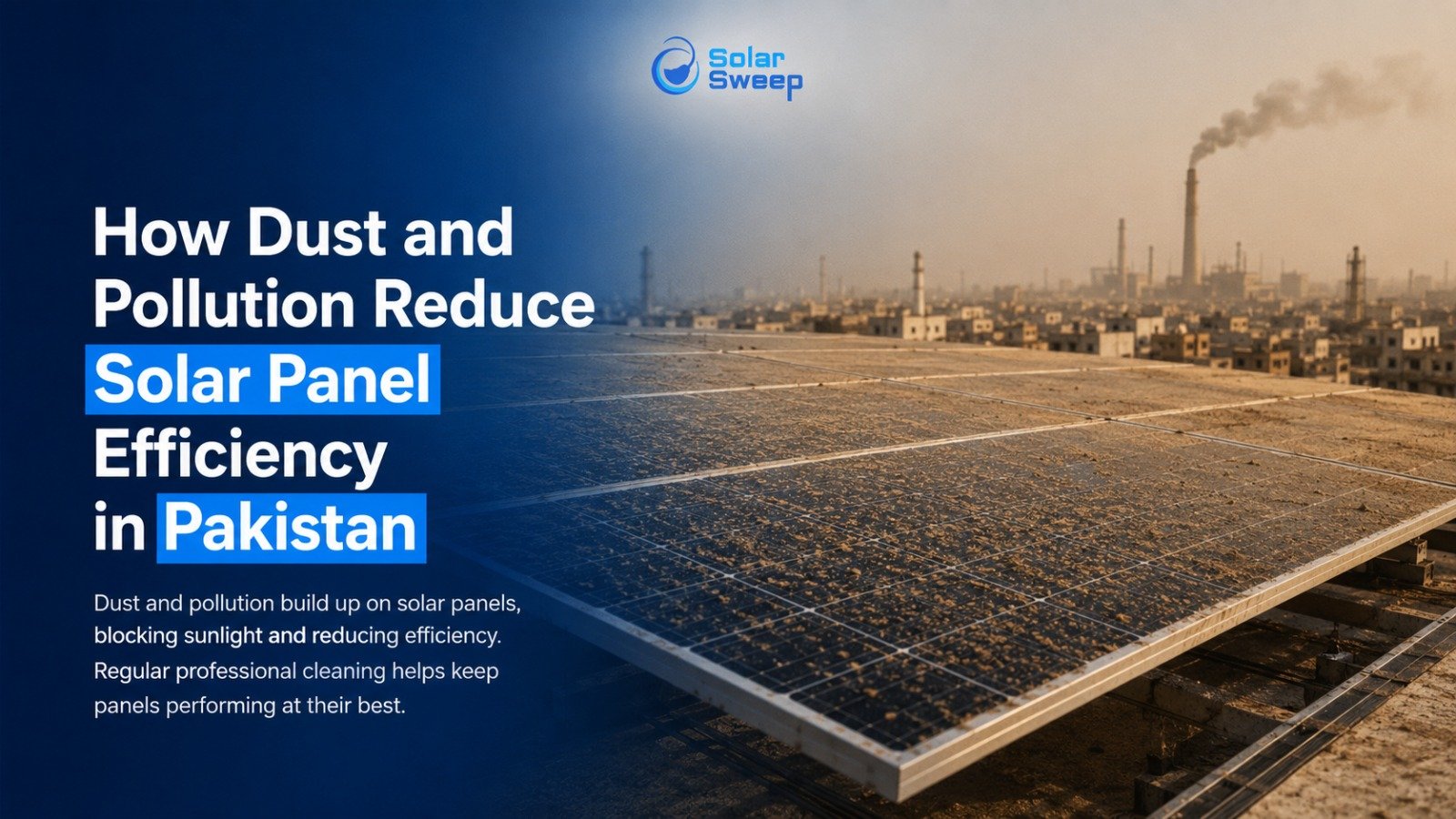
However, dust and pollution are the one aspect that diminishes performance without anyone knowing — and it’s the most significant one.
As with many other parts of the world, solar panel cleanliness is a problem in Pakistan, where the sun can of course be seen in the daytime, but not at night.In Pakistan, for instance, where the country has a wide range of environments from dry inland locations to extremely polluted urban areas, solar panels are seldom kept clean for long periods. When panels are dirty, they are unable to produce a great amount of electricity.
This is where proper cleaning and maintenance becomes essential. Service providers like Solar Sweep, which specialize in solar panel cleaning and performance optimization, play an important role in restoring and maintaining system efficiency.
Table of Contents
Why dust is a bigger problem in Pakistan than expected
Dust, on the surface, is a relatively inconsequential problem. A thin layer on a solar panel might not even look serious. However, solar panels rely on the light reaching the panel without any obstruction.
Dust, no matter how small, can block or scatter the sunlight before it reaches the PV cells. It will decrease the energy that the system can give over time.
This issue is exacerbated in Pakistan due to a number of environmental conditions:
- Regular and persistent dust storms in arid areas.
- Local scale urban construction activity.
- Urban air pollution due to vehicles.
- airborne movement of fine particles caused by changes in weather throughout the season
These conditions constantly lead to contamination of the solar panels, which can be found on the panels in days or weeks after cleaning.
How dust reduces solar panel efficiency
The working principle of solar panels is that they transform the sunlight into electricity. Dust on the surface forms a barrier between the solar cells and the sunlight.
This leads to three main issues:
First, reduction of sunlight reaching the surface of the panel reduces the amount of energy produced.
Secondly, dust can cause irregular shading of the panel. This is a significant issue, especially when the shading is only partial as it can impact the performance of a whole panel segment.
Thirdly, dust can build up over time and become a more difficult layer to remove, which further decreases efficiency.
This translates into a solar system that is supposed to be running all the way that is only producing a percentage of its efficiency without a clean solar system.
Real-world performance loss due to soiling
Soiling (dust accumulation in panels) is one of the most underestimated issues in real life performance of solar energy in Pakistan.
If not cleaned regularly, the efficiency of solar panels can diminish significantly within a short period of time depending on location and environmental conditions.
This loss may be slow to occur in dusty or polluted surroundings so users may not realize the decrease right away. Rather, they observe a little less electricity generation over time, that might get confused with seasonal variations or system problems.
In most instances, however, the culprit is simply dirty panels.
That is the reason why monitoring of performance is important. When output is reduced, it’s not necessarily a system failure, it’s likely a maintenance situation.
Why cleaning restores output immediately
Whereas the efficiency loss due to dust can be reversed unlike many technical problems in solar system.
If these panels are cleaned correctly then the solar energy can once again be received without blocking. This results in an instant boost in energy production.
During many of these situations, the output of the system can improve by a significant amount after a cleaning, particularly if the panels haven’t been properly maintained for a long time.
The reason is that routine cleaning isn’t simply about maintenance, it’s about performance recovery!
Solar Sweep and other service providers specifically target the lost efficiency by providing professional cleaning and maintenance services to different environmental conditions.
Why cleaning is not as simple as it looks
While the idea of cleaning solar panels might sound simple enough, it’s not simply a matter of cleaning the surface of them.
These improper cleaning techniques may cause surface damage or shorten the life of the panel. For instance, the use of hard water, abrasive material, or improper pressure can cause marks or cause the efficiency to diminish over time.
Access and safety are also a concern in large commercial or industrial systems. Special equipment and trained handling are needed for rooftop systems, sloped roofs, and large solar energy installations to ensure safe and effective cleaning.
This is why professional maintenance services are increasingly gaining importance with the rise in the number of people opting for solar energy.
The link between cleaning frequency and energy economics
When considering the use of solar, long-term savings are frequently used to assess solar energy. But it all relies on steady performance over time.
No matter how good the system installation, if it is not cleaned regularly, it will under-perform. This decreases your monthly energy savings and increases the payback of the system.
Regular cleaning on the other hand, helps keep the system working at its designed capacity, ensuring optimal output.
In layman’s terms, the more electricity clean panels produce, the more money they make, and that directly translates to a better return on investment.
This distinction can be a big factor in an user’s pocket after the years.
Environmental conditions in Pakistan and maintenance needs
One of the most significant factors in deciding when solar panels require maintenance in Pakistan is its diverse climate.
In urban areas such as Karachi, pollution and coastal humidity result in a mix of dust and moisture formation. Dry dusting tends to occur more frequently in inland areas. In industrial areas, soiling can also be accelerated by the manufacturing activities occurring in the air.
Due to these different circumstances, there will be no hard and fast rules for the cleaning schedule. Rather, maintenance requirements are a function of local environmental exposures.
This is the reason that it is important to keep monitoring and cleaning solar systems from time to time.
How maintenance services improve long-term performance
Solar maintenance is not just a matter of cleaning the panels when they are visibly soiled. It is about making sure of year-round consistency.
Some of the key areas of professional services are:
- The process of cleaning away dust and other environmental deposits
- Inspecting the surface for problems that may be causing performance problems
- Providing the best possible energy output.
- This will prevent long-term efficiency degradation.
With regular service schedules, solar systems can continue to run near optimum performance over time.
This is especially significant in large commercial installations which can have a big financial and significant energy impact on efficiency losses, even if these are small.
The growing importance of O&M in solar systems
With the growing penetration of solar energy in Pakistan, operation and maintenance (O&M) services are a critical aspect of the market.
Previously, solar power was considered as “Install and forget” solutions. They are now recognized as systems that actively work, and must be periodically maintained to ensure they function.
One of the crucial components of this process is cleaning, particularly in areas where dust and pollution levels are high.
There are companies such as Solar Sweep who are emphasising the need to maintain efficiency and prolong the life of solar investments through professional maintenance solutions.
Final thoughts
In countries such as Pakistan, dust and pollution are significant issues that can have a significant impact on solar system performance.
A thin layer of dust can drastically cut down energy production and this will affect the amount of savings and system efficiency over the years.
Fortunately, this issue is entirely controllable. Solar panels can easily return to their optimum performance and efficiency level with proper maintenance and regular cleaning.
Solar energy is also being adopted as more and more people choose to integrate them into their homes and businesses, maintenance is becoming as critical as installation. Clean solar panels are better than dirty — after all, if they’re dirty, they don’t deliver the returns that they are designed to.