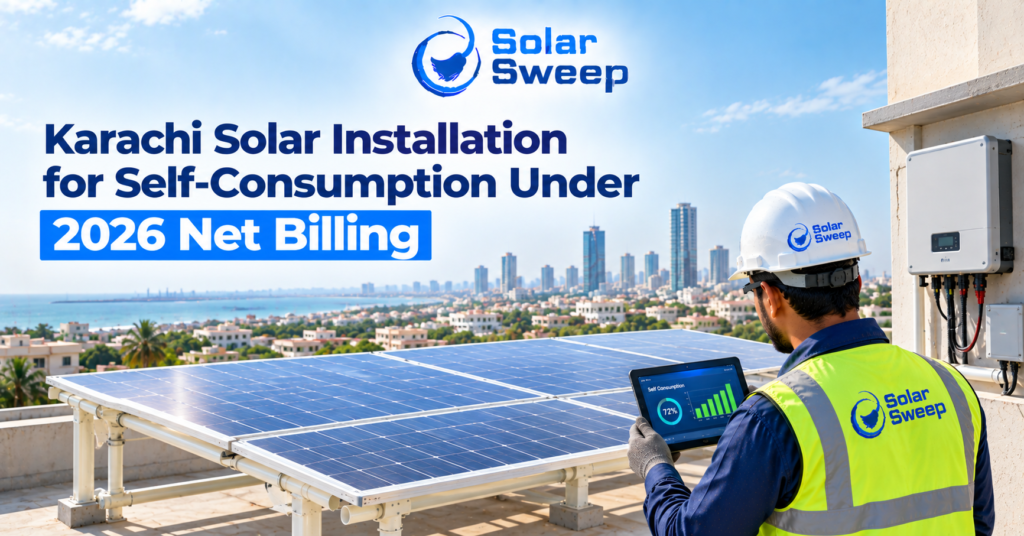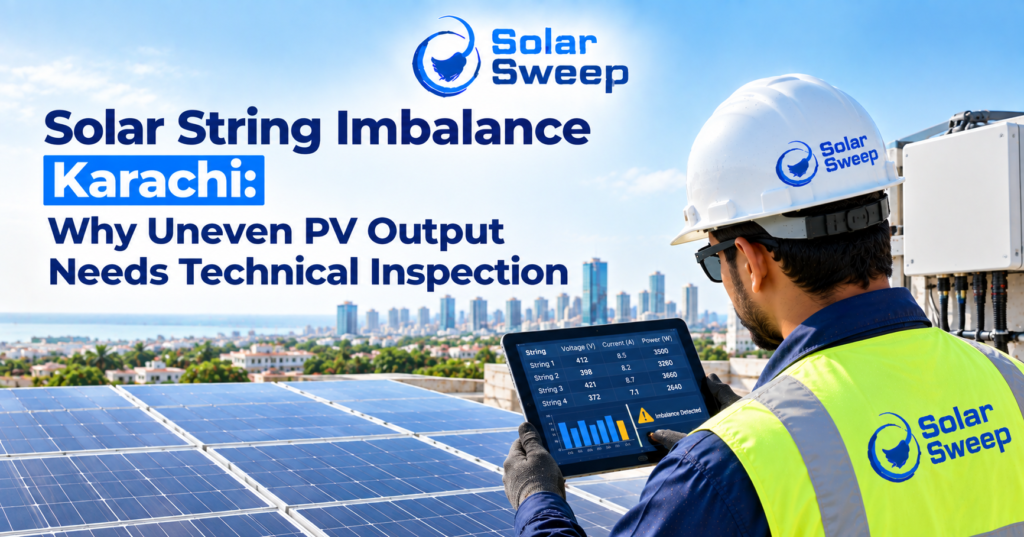

Karachi businesses are increasingly looking at electricity as a long-term operating cost rather than simply a monthly expense. This shift is making Karachi solar investment an important consideration for factories, offices, schools, warehouses, retail outlets, and other commercial properties. Rising interest in distributed generation is also visible in regulatory records, with the NEPRA prosumer records showing continuing applications connected with K-Electric.
For businesses, commercial solar Karachi projects can provide an opportunity to produce electricity closer to where it is consumed. At the same time, rooftop solar Karachi installations are turning unused roof areas into productive business assets. The attraction isn’t only about reducing today’s electricity expenses. It also involves planning for future operating costs, energy resilience, and better use of available property.
Why Businesses Are Watching Solar More Closely
The economics of Karachi solar investment have become more relevant as companies examine their long-term electricity requirements. A business with substantial daytime consumption may be able to use locally generated electricity during its busiest operating hours. This makes solar Karachi particularly relevant for offices, manufacturing facilities, educational institutions, and retail buildings.
Another factor is the growing availability of suitable commercial rooftops. Instead of treating a large roof as unused space, businesses can evaluate rooftop solar Karachi as part of their broader property strategy. This can turn an existing building into an energy-producing asset without requiring additional land.
NEPRA’s industry reporting has also highlighted the advantages of rooftop generation, including locating generation near load centres and reducing transmission and distribution losses.

The Business Case Goes Beyond Monthly Bills
A serious Karachi solar investment decision should consider more than the headline installation price. Businesses need to examine electricity consumption patterns, available roof area, operating schedules, expected generation, financing, maintenance requirements, and the expected useful life of the project.
This is where solar energy savings become a planning issue rather than simply a marketing claim. A company can compare its historical electricity consumption with expected solar production and estimate how much purchased electricity could potentially be displaced.
For companies considering commercial solar Karachi, this approach provides a clearer financial picture. Similarly, rooftop solar Karachi can make sense where buildings have suitable structural conditions and consistent electricity demand.
Karachi’s Solar Market Is Becoming More Active
The growth of distributed solar isn’t limited to residential properties. NEPRA’s current records include multiple 2026 prosumer applications associated with K-Electric customers, showing continued activity in Karachi’s distributed-generation market.
This broader movement gives Karachi solar investment a stronger role in corporate energy planning. Businesses can now evaluate solar alongside other capital investments instead of treating it purely as an environmental initiative.
For commercial solar Karachi, the most useful question is therefore not simply whether solar is popular. It’s whether a particular business has the consumption profile, roof conditions, capital strategy, and operating requirements that make the project financially appropriate.
Planning for Long-Term Solar Energy Savings
Companies considering rooftop solar Karachi should start with reliable electricity-consumption data. Monthly bills, daytime demand, operating hours, roof measurements, and future expansion plans can help establish realistic expectations.
Professional assessment can then connect these factors with expected solar energy savings. Businesses should also compare different project sizes rather than automatically selecting the largest possible system.
For Karachi solar investment, disciplined planning matters because every commercial building has a different energy profile. A warehouse operating during daylight hours may have different requirements from an office building, school, hospital, or retail outlet.
Businesses exploring commercial solar Karachi can also review the latest regulatory information before committing to a project. The IEA’s renewable-energy analysis provides wider context on the continuing expansion of solar power globally.
What Businesses Should Consider in 2026
A practical Karachi solar investment assessment should include electricity consumption, roof availability, structural suitability, expected generation, project costs, financing arrangements, and future energy demand.
For businesses seeking solar energy savings, the objective should be measurable performance rather than assumptions. Solar Karachi can become a strategic asset when its expected generation is matched carefully with actual business consumption.
As solar Karachi continues developing, companies can also examine how energy decisions fit into their wider financial planning. The market’s direction suggests that solar is becoming a mainstream business-energy discussion rather than a niche technology.
For an assessment of your solar requirements, Solar Sweep can help businesses evaluate their existing solar setup and performance needs.
FAQs
Is Karachi solar investment suitable for businesses?
Karachi solar investment can be considered by businesses with suitable roof space, significant electricity consumption, and a long-term approach to energy costs.
Which businesses can consider commercial solar Karachi?
Factories, warehouses, offices, schools, hospitals, retail properties, and other buildings with suitable energy demand may evaluate commercial solar Karachi projects.
Why is rooftop solar Karachi becoming popular?
Rooftop solar Karachi allows businesses to use existing building space for electricity generation while aligning generation more closely with on-site consumption.
How can businesses estimate solar energy savings?
Businesses can examine historical electricity consumption, operating hours, expected solar generation, project costs, and applicable electricity arrangements to estimate potential solar energy savings.