
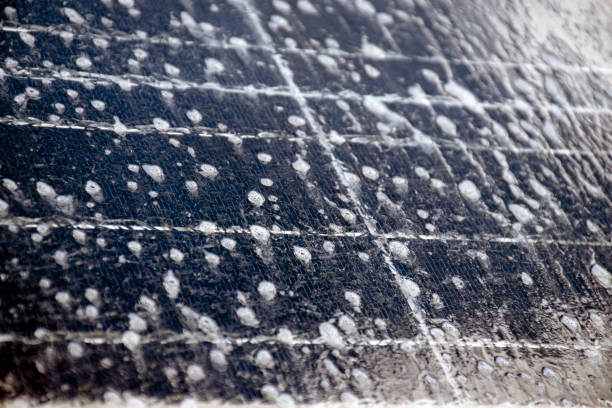
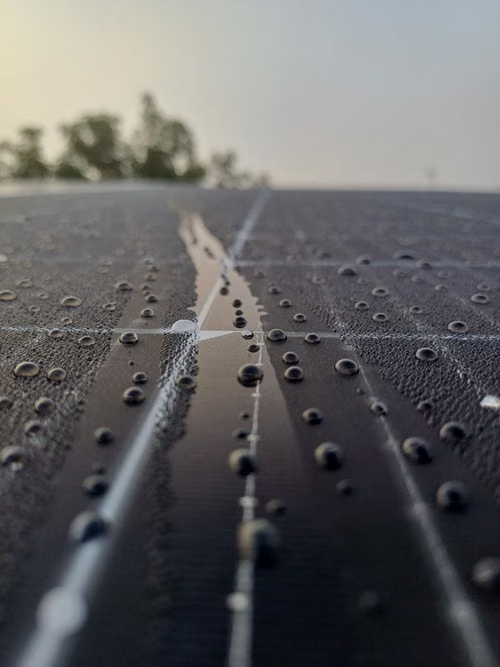
Solar panels are often washed with whatever water is available at the property. The glass may look clean while it’s wet, but white rings, cloudy patches and visible streaks can appear after the surface dries.
These marks are normally caused by minerals left behind when water evaporates. Managing hard-water stains on solar panels Karachi therefore requires a different approach from removing ordinary dust. Repeated washing with mineral-rich water may create more residue, while aggressive scrubbing can scratch the glass or affect protective surfaces.
Solar owners need to understand why these stains form, how they may influence performance and which cleaning methods are safer for photovoltaic modules.
Table of Contents
What Causes Hard-Water Stains?
Hard water contains dissolved minerals, commonly calcium and magnesium compounds. When water droplets remain on a warm solar panel, the liquid evaporates while some of the mineral content stays on the glass.
Repeated washing can gradually create a visible film, especially along the lower edge of tilted modules or in areas where water collects before drying.
These mineral deposits on solar panels may appear as:
- White circular spots
- Cloudy or hazy areas
- Irregular drying marks
- Chalk-like residue
- Streaks near panel edges
The problem may become more noticeable when panels are washed during intense heat, left to air-dry or repeatedly cleaned with water containing high levels of dissolved solids.

Do Hard-Water Stains on Solar Panels Karachi Reduce Solar Output?
A small number of isolated marks may not create a noticeable difference. However, widespread mineral haze can obstruct part of the sunlight reaching the photovoltaic cells, particularly when the residue combines with dust, smoke particles or coastal pollution.
The IEA Photovoltaic Power Systems Programme identifies dust, pollution and biological debris as major causes of solar underperformance. Its 2025 fact sheet estimates that soiling causes average global energy losses of approximately 4% to 7%, although the actual effect depends heavily on site conditions and cleaning practices.
Hard-water residue can also make the glass appear dull and provide a rougher surface on which new dirt collects. Professional solar panel cleaning Karachi should therefore assess the mineral film together with the surrounding dust rather than treating each contaminant separately.
Owners should still avoid assuming that every production decline is caused by dirty glass. Temperature, cloud cover, grid interruptions, inverter faults, shading and electrical problems may also influence generation.
Why More Tap Water May Make the Problem Worse
One of the most common responses to visible water spots is to wash the panels again. This may temporarily improve their appearance, but the stains can return when the new water dries.
If the supply contains significant dissolved minerals, every rinse may leave another thin layer behind. Over time, repeated washing can create more stubborn residue.
This is why solar panel water spot removal should begin with an assessment of the water source. Water supplied from tanks, boreholes or other local sources may have very different mineral content, even within the same part of Karachi.
A basic sediment filter may remove sand or suspended particles, but it won’t necessarily remove dissolved calcium, magnesium or salts.
Safe Water Quality for Professional Solar Panel Cleaning Karachi
The quality of the cleaning water matters almost as much as the cleaning tool.
The Canadian Solar module installation manual recommends water with low mineral content and a near-neutral pH. It also advises using a soft, non-abrasive implement during the cooler part of the day rather than scraping dry contamination.
Where the regular supply repeatedly leaves spots, solar cleaning with deionized water may provide a better final rinse. Deionization removes a large portion of the electrically charged mineral content that can otherwise remain on the glass after evaporation.
Softened, filtered or treated water may also be suitable, but the actual result depends on the treatment method and remaining dissolved solids.
How to Remove Existing Water Spots Safely
Old mineral spots may feel rough and difficult to remove. This can tempt people to use blades, scouring pads, powdered detergent, bathroom cleaners or strong acidic products.
These methods can create a bigger problem than the original stain.
Safe solar panel water spot removal should normally follow this process:
- Inspect the panel for cracks, damaged seals and exposed electrical parts.
- Remove loose dust using module-safe equipment.
- Wet the affected area and allow the residue to soften.
- Use a clean microfiber pad, soft sponge or non-abrasive brush.
- Apply only a manufacturer-compatible cleaning product when necessary.
- Rinse the surface with low-mineral water.
- Prevent dirty runoff from drying around the lower frame.
- Check the panel again after it has dried.
The process should begin with a small test area. If the deposit doesn’t respond to an approved cleaning method, technicians shouldn’t immediately switch to abrasive tools.
Why Panels Should Be Cleaned During Cooler Hours
Karachi rooftops can become extremely hot during the afternoon. Applying much cooler water to heated glass creates unnecessary thermal stress and causes the water to evaporate rapidly.
Fast evaporation also gives technicians less time to rinse away loosened minerals before they dry again.
The Trina Solar module user manual recommends soft water, a controlled pH range and soft, non-conductive cleaning tools. It also warns against methods that may scratch the glass or damage the frame.
For this reason, professional solar panel cleaning Karachi should usually be scheduled early in the morning or later in the day. Panels should be cleaned in manageable sections so each area can be washed and rinsed before it becomes hot again.
Workers should never stand or kneel on modules, and high-pressure water shouldn’t be directed towards connectors, junction boxes or visibly damaged seals.
Can Vinegar or Household Glass Cleaner Be Used?
Online cleaning advice often recommends vinegar, glass cleaner, bathroom descaler or other household chemicals.
These products may dissolve mineral residue, but compatibility depends on concentration, panel construction, sealant materials and manufacturer guidance. A chemical considered safe for a home window isn’t automatically suitable for solar-module coatings, aluminium frames or nearby electrical parts.
Owners should avoid experimenting with strong acids, alkaline cleaners or mixed chemicals. A trained provider should use the mildest effective approach and follow the cleaning instructions for the installed panel brand.
Preventing Mineral Stains From Returning
Preventing stains is usually easier than removing an established mineral film.
Property owners can reduce recurring mineral deposits on solar panels by:
- Reviewing the water source
- Avoiding cleaning during peak heat
- Using low-mineral water for the final rinse
- Preventing dirty water from pooling at panel edges
- Keeping brushes and cloths free of grit
- Inspecting the glass after it dries
- Following the module manufacturer’s instructions
- Recording cleaning dates and visible results
For sites with repeated spotting, solar cleaning with deionized water can become part of the regular maintenance process instead of being used only after severe staining appears.
How Often Should Stained Panels Be Cleaned?
There’s no single schedule for every solar installation.
Cleaning frequency depends on panel tilt, traffic pollution, construction activity, birds, coastal residue, rainfall and water quality. A property near an active construction site may need attention sooner than one in a cleaner, more open location.
Owners should combine visual checks with inverter data. Cleaning should be considered when the modules show visible contamination or when output trends suggest that soiling may be affecting performance.
If every wash creates new water marks, increasing the cleaning frequency with the same water isn’t the right solution. Correcting the water quality and drying method is more important.
Choosing a Professional Cleaning Provider
A suitable provider should explain:
- What water will be used
- Whether the water is treated
- Which tools are suitable for the modules
- How stubborn deposits will be handled
- When the cleaning will take place
- Whether photographs are included
- What happens if a stain cannot be removed safely
Solar Sweep provides solar-panel cleaning and maintenance support for residential, commercial and industrial properties in Karachi. The team can assess visible contamination, select an appropriate cleaning method and identify concerns found around the panels during the service.
Customers arranging professional solar panel cleaning Karachi should confirm whether the quotation covers specialised stain treatment or only a standard wash.
Final Thoughts
Managing hard-water stains on solar panels Karachi begins with recognising that the cleaning water itself can become part of the problem. Washing more frequently won’t deliver a better result when every rinse leaves another mineral layer.
A reliable plan combines safe solar panel water spot removal, non-abrasive tools, cooler cleaning hours and suitable water quality. For properties experiencing repeated marks, solar cleaning with deionized water can help reduce residue without relying on aggressive treatment.
Noticing cloudy glass, white marks or recurring streaks after every wash? Book a professional solar cleaning assessment with Solar Sweep to identify the residue and choose a safer cleaning method.
FAQs
Are Hard-Water Spots the Same as Dust?
No. Dust consists of particles resting on the glass, while hard-water spots are mineral residue left behind after water evaporates. Established mineral marks may require a different cleaning method.
Can Rain can do solar panel water spot removal?
Rain may remove some loose dust, but it may not dissolve an established mineral film. Rain can also mix with existing dirt and leave new streaks after drying.
Is Deionized Water Necessary for Every System?
No. However, it can be useful when the available supply repeatedly leaves visible residue or when a cleaner final rinse is required.
Can Water Spots Permanently Damage Solar Panels?
Many water spots can be removed. The greater risk often comes from using blades, rough pads or unsuitable chemicals in an attempt to remove them.
Should Solar Panels Be Dried After Cleaning?
The appropriate method depends on the manufacturer’s guidance and water quality. When mineral-rich water is used, allowing large droplets to dry naturally can leave new spots.