The solar panels are a long-term investment which is supposed to work for decades, but are vulnerable to the condition of their surfaces. Cleaning is a very critical activity and has the potential to create more disaster than good when performed incorrectly, albeit in a dual manner. Damage in the form of scratches, micro-abrasions or broken coatings is always likely to result when using rough tools or improper methods. This is where the waterless cloth technology enters and offers an effective and safe way of cleaning the fragile surfaces of the solar panels without ruining the building and its usage.
Table of Contents
Why are Solar Panel Surfaces More Fragile than They Appear
It is even better that the solar panels are nowadays painted with some anti-reflective material so that they receive as much sunlight as possible. It is layer sensitive to friction, particle sensitive (abrasive) and harsh cleaning tools sensitive, but the toughness of the glass is noticed at drift.
The light can be reflected through even the most minor scratches, reducing the performance and causing dirt to deteriorate fast. The risk is that in cities with large concentrations of dust, like Karachi, unless cleaning is undertaken by qualified personnel, there is a threat that the situation will increase. Protection on the surface is not the alternative; it is the necessity of long-term performance.
Common Causes of Scratching in Cleaning
Most of the scratches are not done by negligence, and it is merely ignorance in knowing how to clean correctly. The most widespread of them are:
- Those with coarse sponges or pads with abrasives, scrape the dust on the surface of glass, and on the nails that hold it on the pad.
- Each step, dry wiping without dust lifting, thereby creating micro-scratches as a result of friction.
- Spraying toxic materials, water, and soap to remove dirt.
- Supplying non-solar household clothes.
The example of such mistakes is the unprofessional solar panels cleaning that typically addresses the location of speed rather than the safety of the surface.
What is Waterless Cloth technology?
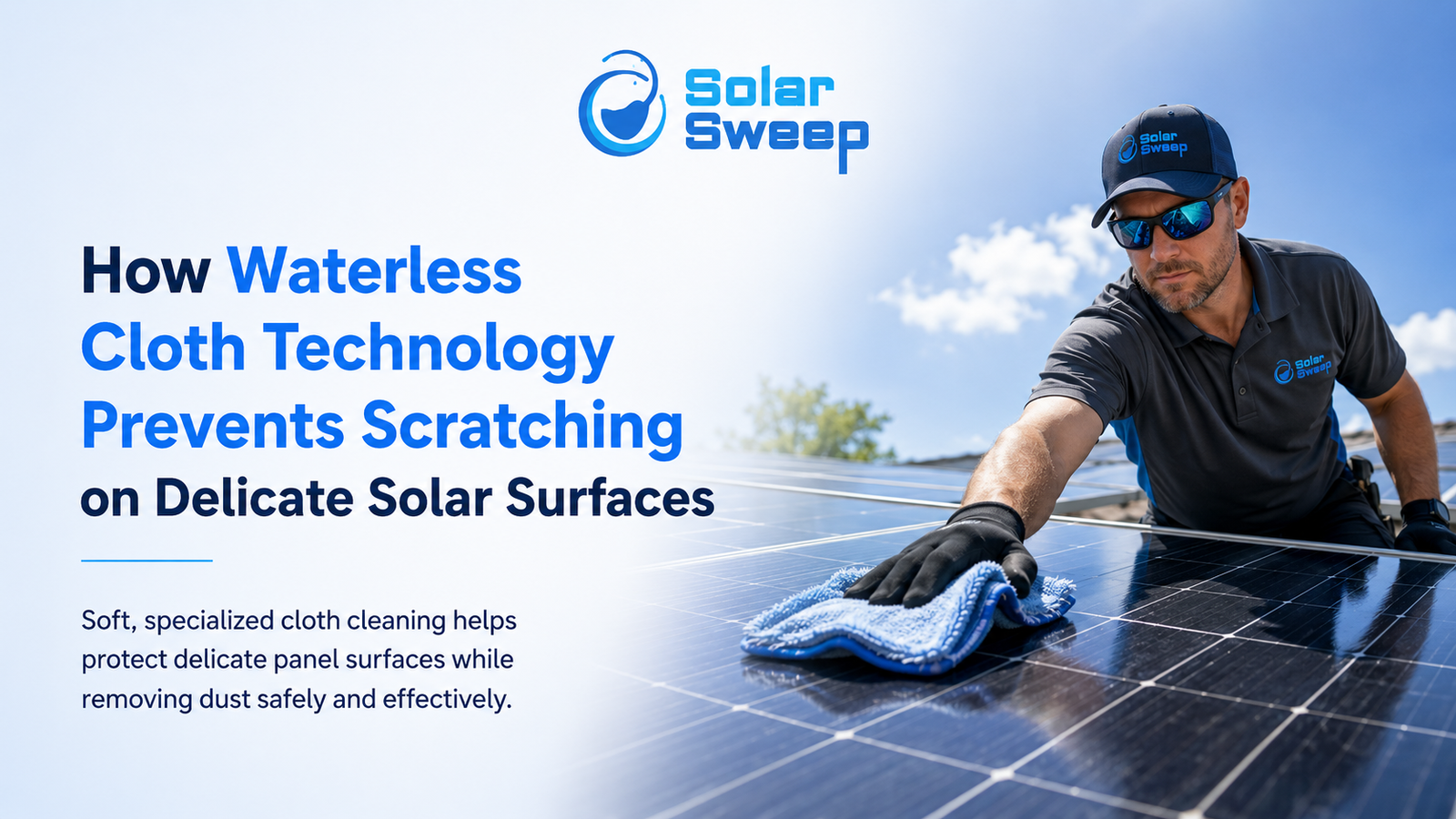
Waterless cloth is merely the waterless method, where dust is trapped in between the fabric instead of being showered over the blanket using water like the rest of the clothes. These linens are so gentle and incredibly soft, and their structure is developed to loosen particles. The dust is caught and removed, unlike in traditional wiping, therefore reducing friction significantly.
It is mainly used in dry and dusty environments. It is primarily used as a solution to other major Sargha Karachi Cleaning Solar Companies, which are more concerned about the safety of their panels and, most importantly, their cleanliness.
How Waterless Cloths Help Remove the Scratches
This waterless cloth technology is based on the fibre construction. The ends of the strands of the microfibers are split, similar to a small hook, where dust particles are captured before being scratched on the surface. This ensures:
- Low-pressure interventions on surrogate wombs.
- No grinding either of sand or dust against the glass.
- Inspections of the anti-reflective paint.
- Not even cleaning streakless and markless.
The use of no traces of excess water is said to risk exclusively the formation of mineral deposits after the panel is dry, as well.
Professional Cleaning vs DIY Cleaning
However, even waterless cloths may seem to be bare, yet their performance depends on the way a professional works with the fabric. The trained technicians are aware of cleaning in routine strokes, the number of times cloths should be rotated, and when the surface can be pre-treated. The involved teamwork in Solar Cleaning Services has made procedures codified in such a way that cleaning enhances performance rather than discourages it.
Over time, such companies as Solar Sweep have levied fines on tuned the same methods; waterless cloth technology is employed where military entipping is concerned in terms of how that is handled, as such, the panels are left without scratches and fully functioning. This is the reason why people associate the company with the best solar panels cleaning services in the region.
When to use Waterless Cloth Cleaning
Its application under the following conditions is particularly applicable in case there is a need to use the waterless cloth technology:
- Light to medium dust deposition.
- Areas with water scarcity
- Panels that are sensitive-coated.
- Clean the premises regularly, sometimes between deep washes.
This is a secure and effective method of offering customers the choice of Solar Cleaning Services near me, without disrupting the daily production of energy.
LTC benefit of Scratch-free Cleaning
The prevention of scratches also has a direct relationship with energy output and system life due to its appearance and impact on energy output. Globe and framing Panels that are undamaged and have a smooth finish:
- Better light transmission plus the standard output.
- Slower dust re-accumulation
- Morbid to molesting in cleaning.
- Long panel life and permanent returns.
That is why, such a good supplier as Solar Sweep incorporate waterless cloth methods into their maintenance cycle, so they never fear changing their clothes, as such a system would protect their equipment in a reliable system.
The Search for the Successful Cleaning Partner
Not all the service providers apply advanced cleaning technologies. A team of professionals that is sensitive to surfaces must be selected. Solar Cleaning Companies in Karachi are the finest since it not only focuses on cleanliness but also on the safety of the structure, coating, and performance of the panel through experimental methods.
Conclusion
Waterless cloth technology is a clever gadget for solar upkeep, and this is an adequate and simple substitute to washing the delicate solar surfaces, leaving no scratches on them. This operation conserves energy because it does not drag dust but raises it up such that they do not touch the anti-reflecting cover, and this reduces the time it takes to finish, as well as the panel will have an increased running time.
Professional users of such methods, like Solar Sweep, allow saying that the systems will be cleared in a secure and effective manner, as well as continue to operate in the business over the long run. Clean panels are dear enough, but it is the shielded panels that would make sustainable energy a success.