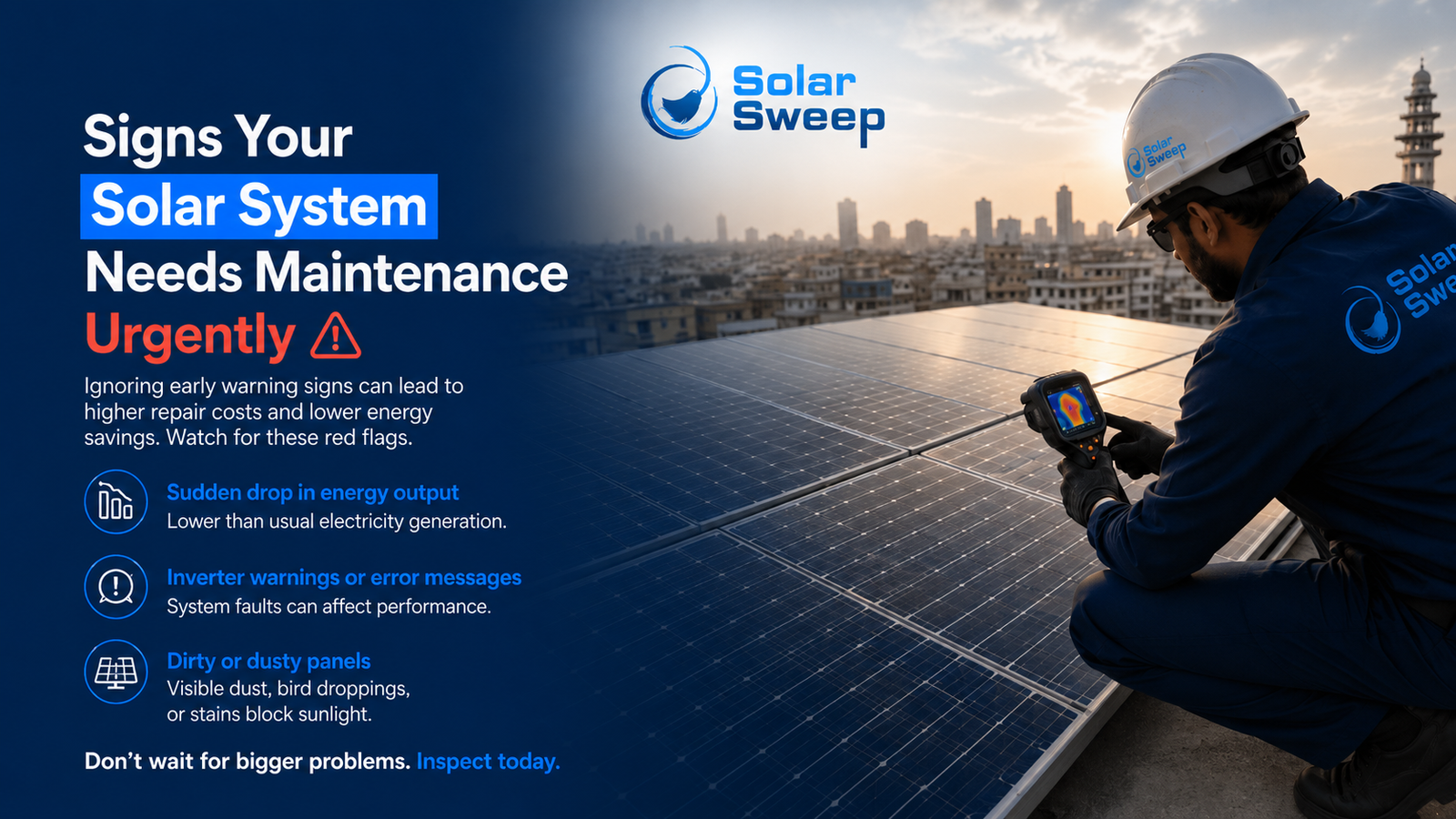
A solar system usually works quietly, so developing problems can be easy to miss. Many owners only notice an issue when electricity bills rise or the inverter stops working. By then, a small fault may already have reduced output or created a safety concern. Timely maintenance protects the equipment and overall investment.
Table of Contents
1. A Sudden Drop in Energy Production
An unexpected fall in daily generation is one of the clearest warning signs. Compare current output with previous readings from days with similar sunlight. A small seasonal change may be normal, but a sharp or continuing decline needs attention.
Possible causes include:
- Heavy dust or bird droppings
- New shading
- Loose electrical connections
- A damaged panel
- Inverter faults
- Cable damage
- Monitoring errors
If cleaning doesn’t restore output, arrange professional Solar system inspection services to identify the cause.
2. Inverter Warning Lights or Error Codes
Warning lights, repeated shutdowns, unusual messages, or error codes shouldn’t be ignored. Recurring errors can indicate overheating, insulation problems, voltage issues, or component failure.
Record the code and the time it appeared. Don’t open the inverter or touch exposed parts. A trained technician should inspect the unit, wiring, protection devices, and system settings.
3. Electricity Bills Rise Unexpectedly
A higher bill may mean the grid is supplying more electricity because the solar system is producing less. Compare recent bills and generation reports before assuming household use has increased.
When usage is stable but savings are falling, professional Solar panel maintenance Karachi can determine whether dirty panels, faulty equipment, shading, or another problem is responsible.
4. Panels or Wiring Show Visible Damage
Inspect the system from a safe location. Cracked glass, burn marks, exposed wires, loose cables, damaged connectors, and signs of water entry require prompt action.
Urgent warning signs include:
- Cracked or discoloured panels
- Melted or blackened connectors
- Hanging or exposed cables
- Water near electrical equipment
- Burning smells
- Sparking or buzzing
- Loose panels or mounts
Keep people away from the area if there’s smoke, sparking, or exposed wiring, and contact a qualified professional immediately.
5. Panels Are Heavily Soiled
Thick dust, bird droppings, leaves, and industrial residue can block sunlight and reduce output. Uneven soiling is especially concerning because one section may perform far below the rest of the array.
Solar Sweep offers panel cleaning together with inspections and maintenance support. It recommends non-abrasive tools and suitable cleaning methods rather than harsh chemicals or unsafe techniques.
6. The Inverter Overheats or Makes New Noises
Inverters produce some heat and sound, but excessive heat, repeated fan operation, loud humming, clicking, or buzzing may indicate trouble. Poor ventilation, dust buildup, loose parts, or internal wear can cause these symptoms.
Make sure the ventilation area isn’t blocked, but don’t attempt internal repairs. Continued overheating can shorten equipment life and cause repeated shutdowns.
7. Mounting Structures Look Loose or Corroded
Panels must remain securely attached to the roof or support frame. Loose bolts, rust, corrosion, cracked supports, or changes in alignment should be addressed quickly. These problems may worsen during strong winds.
Commercial and industrial systems should include structural checks in every planned maintenance visit.
8. One Panel String Produces Less Than Others
Monitoring software may show that one string or section is producing less than the rest. This difference can result from shading, dirt, a loose connector, damaged wiring, or a failing panel. It often requires electrical testing rather than visual inspection alone.
Solar Sweep provides energy monitoring, panel replacement, damage assistance, and operations and maintenance services in addition to cleaning.
What an Urgent Maintenance Visit Should Cover
A complete Solar system repair and maintenance visit may include:
- Cleaning and visual checks
- Inverter diagnostics
- Voltage and current testing
- Cable and connector inspection
- Earthing and protection checks
- Mounting assessment
- Performance comparison
- Repair or replacement recommendations
The technician should explain the fault, safety concerns, and proposed solution before starting major work.
Final Thoughts
Solar faults rarely fix themselves. Falling production, inverter errors, damaged wiring, unusual sounds, heavy soiling, and loose mounting parts all require timely attention. Solar Sweep can support residential, commercial, and industrial owners through cleaning, monitoring, inspections, replacements, and maintenance services.
Acting early can prevent energy loss, reduce repair costs, and protect valuable equipment. Check monitoring data regularly and schedule professional maintenance whenever performance or safety appears uncertain.