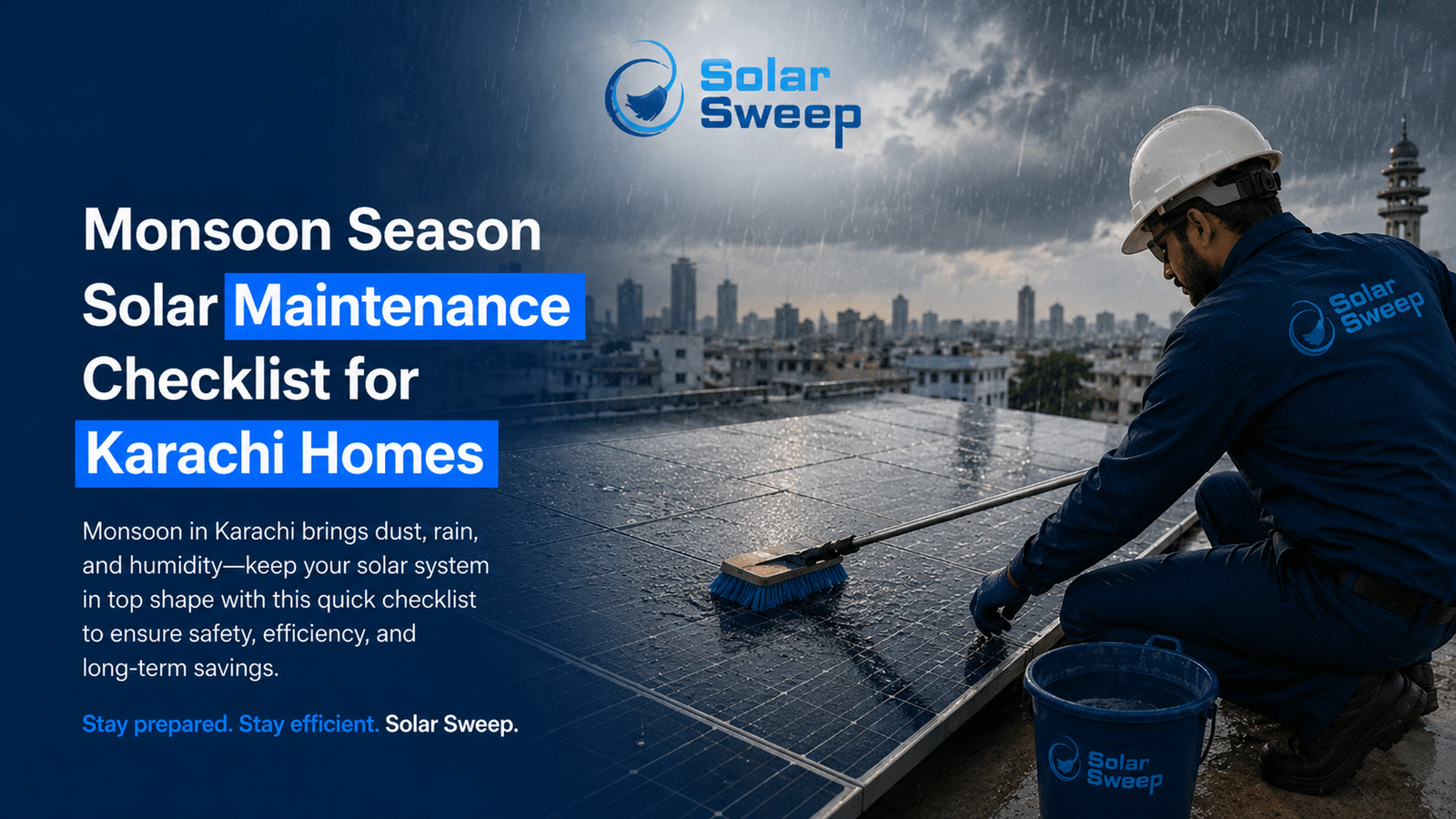
Karachi’s monsoon can be a relief after months of heat, but it can also be rough on rooftop solar systems. Strong winds bring dust, leaves, plastic bags, salt moisture, and muddy splashes that settle on panels. Rain may wash away loose dirt, but it does not always remove sticky grime, bird marks, rust stains, or drainage residue. For homes that depend on solar to control electricity bills, a seasonal checklist helps protect performance, safety, and long-term system life.
Solar Sweep recommends treating monsoon preparation as preventive care, not emergency repair. A few timely checks before and after heavy rain can reduce power loss, avoid water-related damage, and keep the system working smoothly when cloudy weather already limits generation.
Table of Contents
Check Panel Surface Before the First Heavy Rain
Start with a clear visual inspection from a safe position. Look for dust layers, bird droppings, leaves, broken glass, cracked corners, stains, or unusual marks. Even when the panels seem clean from the ground, the surface may have a thin film that blocks sunlight.
For Karachi homes, professional Solar panel cleaning Karachi services are useful before monsoon because rooftop dust can turn into sticky mud once rain begins. Muddy patches dry unevenly and may leave a stubborn layer on the glass. Clean panels capture sunlight better, especially during short sunny breaks between clouds.
Inspect Mounting Structure and Roof Area
A solar system is not only panels. The structure, clamps, roof anchors, wiring route, and drainage path matter just as much. During high winds, loose frames or weak supports can create vibration. Over time, that vibration may affect panel alignment or cable safety.
Before peak monsoon, check these points:
- Tightness of visible clamps and support frames
- Rust or corrosion on metal parts
- Loose wires hanging under the panels
- Water pooling near panel legs or conduits
- Debris blocking roof drains
- Any shade caused by new tree growth or nearby objects
Never climb on a wet roof or touch wiring after rainfall. A trained technician should handle close inspection and maintenance.
Review Inverter Readings and Energy Output
Your inverter gives early signs of system health. Compare daily generation with previous weeks while keeping weather conditions in mind. A cloudy day naturally produces less energy, but a sudden drop after rain may suggest dirt buildup, loose connections, inverter warnings, or panel-level issues.
If the inverter shows error codes, frequent shutdowns, low voltage alerts, or unusual fluctuations, do not ignore them. Monsoon humidity can expose weak cable joints and poor insulation. Proper Solar system inspection services can identify these problems before they turn into bigger repair costs.
Clean Panels the Right Way
Solar panels need careful cleaning. Harsh brushes, detergents, hard water, pressure washers, and careless foot traffic can damage glass coating or frames. Cleaning should be done at the right time of day, usually early morning or evening, when panels are cool.
A safe cleaning routine includes:
- Using soft equipment designed for solar glass
- Avoiding abrasive chemicals and rough scrubbing
- Checking water quality to reduce mineral spots
- Keeping direct body weight away from panels
- Cleaning around the panels, not only the glass
Professional cleaning is especially important for multi-storey homes, sloped roofs, and systems with difficult access.
Protect Wiring, Junction Boxes, and Connectors
Rainwater can find small gaps. Cable ties, conduits, connectors, and junction boxes should be checked for damage, looseness, or exposure. Poorly protected wiring can cause energy loss, tripping, and safety risks. If you see cracked insulation, open connectors, burn marks, or water near electrical points, stop using the system until it is checked.
This is where Solar maintenance services Pakistan become valuable. A complete service visit should include surface cleaning, structure review, wiring inspection, inverter reading, and basic performance reporting.
After-Rain Checklist for Homeowners
Once the weather is safe, review the system again. You do not need to handle technical parts yourself, but you should notice visible changes.
After heavy rain, check:
- Are the panels visibly stained or muddy?
- Is water collecting under the array?
- Are cables still clipped neatly?
- Is the inverter operating normally?
- Has generation returned to its usual range after sunlight returns?
Book a seasonal check with Solar Sweep if you notice continued low output, stains that do not wash off, or any visible electrical concern. Monsoon maintenance keeps your solar investment productive when every unit of electricity matters.