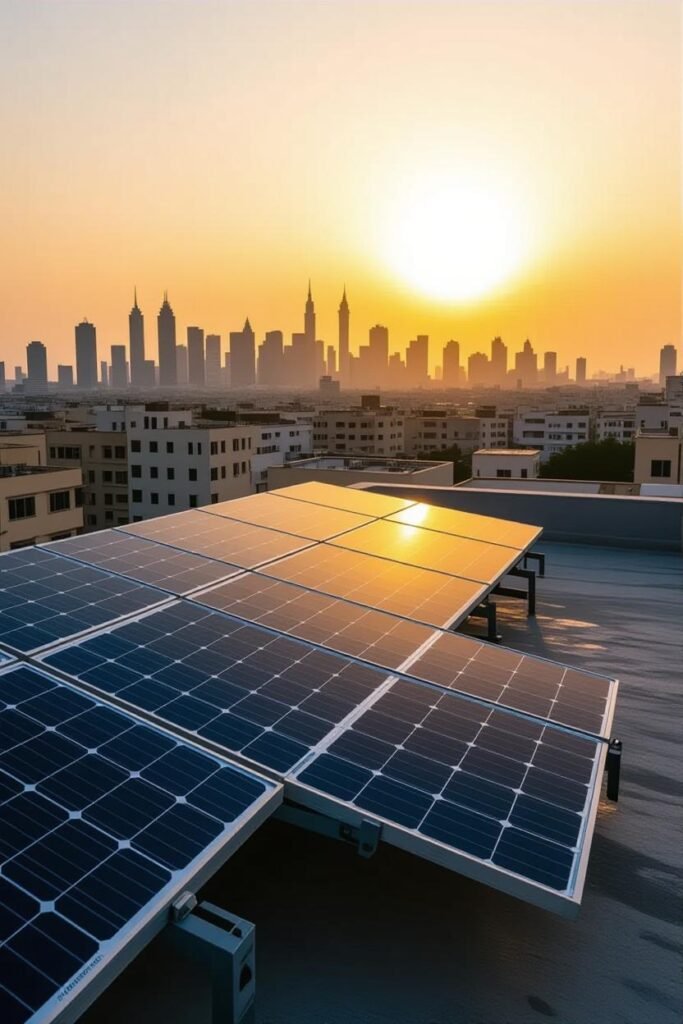
Solar panels are constructed in such a manner that they can absorb the sun and convert it into electricity, which is a clean and reliable source of energy. Nevertheless, even the most efficient panels may lose a considerable part of their productivity when dusted or struck by bird droppings. These are natural but inevitable factors which are related to hindrances to sunlight, which gradually reduce performance. A lot of house owners believe that these water drops or wind will automatically clean the surface, but in an actual sense, they tend to stick firmly and keep on blocking the light.
Why Dust Is a Hidden Threat
The most widespread and least considered cause of power loss of solar panels is dust. It gradually accumulates on the panel surface, particularly in dry months when the wind blows the dirt along the roads, construction sites, and open plots. This thin layer, once settled, limits the amount of light that enters the solar cells beneath it.
Main Causes of Dust Build-Up:
- Urban Pollution: Some smoke from vehicles and industries mixes to create a fine grey film.
- Construction Activity: Cement and sand particles propagate or stick to the flat surfaces easily in the air.
- Dry Winds: Salt of the sea in Karachi and other coastal areas in Pakistan is blown by winds and interacts with dust to create a tenacious and dusty crust.
The Tougher Obstacle: Bird Droppings
Bird droppings are much more destructive than dust, which is easily removed. They shape dark, irregular spots, which, in addition to blocking sunlight, pose a challenge to technicians who term them as hot spots. When these thick marks prevent the sunlight from penetrating through them, some of the parts of a solar panel would become hotter than others, thus putting a strain on the internal circuits. This imbalance in heating can eventually decrease the life of the panel, and in the worst-case scenario, can lead to small cracks or even permanent damage.
Common Issues from Bird Droppings:
- Direct Light Blockage: A cluster of solar cells may be fully blocked by even a drop of light.
- Hot Spot Formation: This is when heat accumulates in particular locations, resulting in wear and tear on the silicon or glass layer.
- Corrosive Damage: Droppings may cause the panels to have protective layers, which may be eroded by the acidic content of droppings.
Impact on Energy Efficiency
Dust and droppings limit the volume of sunshine that the panels can gather. This can eventually produce significant changes in electricity generation and conservation.
Measurable Effects Include:
- Reduced Power Production Each Day: Even a slight accumulation will result in loss of a few kilowatt-hours a day.
- Higher Payback Time: Reduced efficiency will result in diminished payback.
- Component Stress: Dirt retains water that has the ability to corrode wiring and panel frames.
Why Natural Rain Isn’t Enough
People have a wrong perception that the rainfall naturally cleans rain panels. As a matter of fact, rainwater in urban and coastal areas is usually dissolved in minerals, salts and other pollutants. These substances are left as faint stains when the water evaporates, and thus continue to gather dust and debris. The city of Karachi is in a humid climate, and hence the water droplets will dry fast, leaving behind mineral rings and streaks, which are even harder to remove than dry dust. Each time it rains, more layers of residue are deposited – that is, your panels become dirtier and not cleaner.
Professional Cleaning Is the Safe Solution
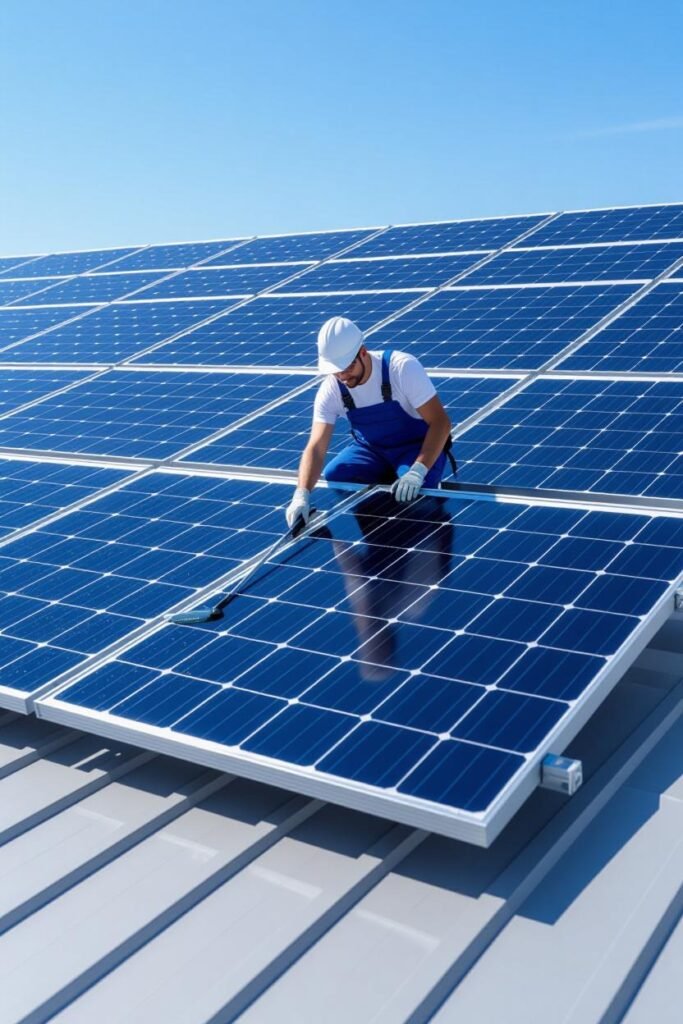
When trying to clean the panels using tap water, detergents or a rough brush, the surface is likely to be scratched or damaged. That is why such professional services as Solar Sweep follow a well-tested and safe procedure, which includes deionised water and non-abrasive instruments.
Professional Cleaning has the following benefits:
- No Minerals: In evaporating deionized water no marks or streaks are produced.
- Soft Tools: Nicotinous brushes and telescopic poles touch no electrical components.
- Better Production: When the surface is completely clean, it can have as much sunlight as possible.
Seasonal Maintenance to Have Consistent Results
In dusty or coastal areas, solar panels require cleaning on various occasions throughout the year to continue producing. Solar Sweep suggests that it is recommended to schedule according to the weather in the area:
- Post-Monsoon: To get rid of mud, salts and pollutants residue.
- Pre-Summer: Clears off panels prior to the peak of the strongest sunlight.
- Dusty Seasons: Cleanings are done frequently to avoid the long-term stains and heat-damage.
Regular washing ensures efficiency as well as preventing corrosion of metal components and frames.
Securing the Long-Term Investment
Better performance is not the only reason why clean panels are better, they last longer and have fewer repairs. Regular maintenance:
- Stays surfaces reflective and transparent to allow optimal absorption of energy.
- Eliminates moisture accumulation which causes corrosion.
- Prolongs the solar system life by a number of years.
Homeowners can keep their solar installations operating at a high level of power output and savings by employing the services of reputable installers such as Solar Sweep to maintain their panels and have them produce the best output.
Conclusion
Bird droppings and dust are not so big problems on their own, but a combination of both can cause a significant decrease in the amount of solar power. These factors are rapidly accumulating in the cities of coasts like Karachi and disrupt the performance of the solar systems. They cannot be carried away by natural rain, and they tend to layer minerals of their own.
The remedy is regular professional cleaning. Solar Sweep and other types of services are safe and specialized and ensure that all sunlight is exposed, performance is enhanced and your investment in your solar is not wasted.